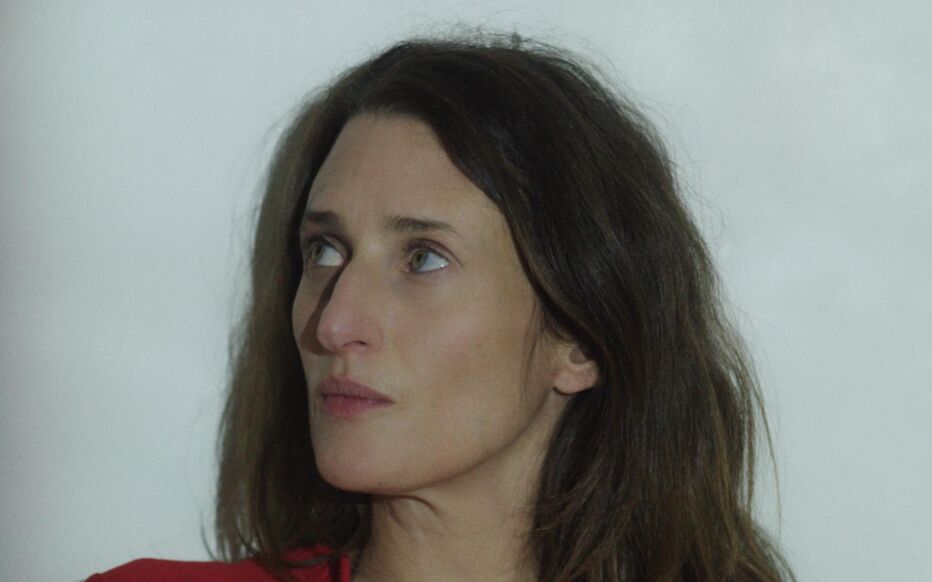
 Image courtesy of France Channel, “H24: 24 heurs dans la vie d’une femme” (2021)
At first glance, the project H24 – 24 heures dans la vie d'une femme appears structurally simple: twenty-four short films, each depicting a moment in a woman’s day. Yet the conceptual power of the project—and the reason it became an event discussed during the 2023 edition of the Festival d'Avignon—lies in its insistence on perspective. Rather than presenting a single narrative about violence against women, H24 multiplies viewpoints: different writers, different actresses, different cultural contexts, and different emotional registers.
What emerges is not merely a collection of stories but a polyphonic work in which meaning is generated through contrast. The project’s originality rests on the idea that no single perspective can adequately represent the complexity of women’s everyday experiences. Instead, truth emerges through the coexistence—and sometimes the clash—of many voices.
A Manifesto Built from Fragments
The creators of H24, Nathalie Masduraud and Valérie Urrea, conceived the project as what they describe as a “manifesto series,” based on real events and designed to reveal the violence women encounter in the course of a single day. Each short film adapts a text written by one of twenty-four European women authors and is performed by a different actress. The result is a deliberate fragmentation: twenty-four voices speaking from twenty-four emotional and social positions. This structure immediately resists a common problem in narratives about gendered violence—the temptation to universalize experience. Instead of presenting “the female experience” as a single story, H24 insists that experience is plural. The work therefore functions less as a narrative and more as an archive of perspectives.
The importance of this approach becomes clear when we consider the cultural context in which such stories often appear. Media depictions of violence tend to simplify events into a binary structure: victim and aggressor, crime and consequence. H24 disrupts this simplicity. Some episodes focus on physical violence; others on subtle humiliation, intimidation, or psychological pressure. The series suggests that the everyday texture of gendered experience cannot be reduced to spectacular acts alone.
Perspective as Political Strategy
The multiplication of perspectives in H24 is not simply aesthetic—it is political. Violence against women often remains invisible precisely because it appears ordinary. By presenting many small stories instead of one grand narrative, the series reveals how pervasive these experiences are. Each episode functions like a fragment of a much larger mosaic. On its own, a single story might appear anecdotal. Together, the stories create a structural portrait of society. This strategy reflects a broader feminist methodology: the belief that personal testimonies accumulate into political insight. When dozens of voices describe different forms of harassment, coercion, or intimidation, the viewer begins to recognize patterns. The individual story becomes evidence of a systemic reality. The series therefore uses perspective to dismantle the myth of exceptionality. The question is no longer whether violence occurs; it becomes how frequently and in how many forms.
The Emotional Spectrum of Testimony
Another key dimension of perspective in H24 lies in emotional variation. Not every episode expresses the same tone. Some are filled with anger, others with shame, confusion, irony, or resignation. This diversity is essential. If the project relied exclusively on outrage, it would risk flattening emotional complexity. Instead, H24 acknowledges that experiences of violence can produce contradictory responses. A woman might laugh off a humiliating moment in one episode, while another might confront trauma directly. Neither reaction is presented as more authentic than the other. The series suggests that emotional responses are shaped by circumstance, personality, and cultural expectations. This emotional multiplicity deepens the realism of the project. It reminds viewers that trauma does not produce a single, predictable reaction.
Polyphony on Stage: From Screen to Performance
The power of perspective extends beyond the original series. The choreographer Mathilde Monnier drew on texts from H24 to create the dance piece Black Lights, presented during the Avignon Festival.
In this adaptation, multiple performers embody the stories through movement. The stage becomes a physical space of testimony where bodies express the psychological impact of violence. The choreography transforms the written voices into gestures—raised legs, defensive arms, twisted bodies—that evoke both vulnerability and resistance. Crucially, the performers come from different countries and generations, reinforcing the project’s emphasis on plurality. The message remains the same: no single perspective can represent the collective experience. Through this translation from film to dance, H24 demonstrates how perspective can migrate across artistic forms. Words become bodies; testimonies become movement. Yet the underlying polyphony remains intact.
The Ethics of Listening
Perhaps the most profound contribution of H24 lies in the ethical posture it demands from the audience. Because the series is composed of many short episodes, viewers cannot settle into the comfort of a single narrative arc. Each story interrupts the previous one. This structure requires active listening. The audience must repeatedly adjust its perspective—emotionally, morally, and intellectually. Such constant recalibration mirrors the real challenge of understanding experiences different from one’s own. Empathy is not a single gesture but a repeated act of attention. In this sense, H24 transforms spectatorship into a form of responsibility. Watching becomes a process of acknowledging voices that might otherwise remain unheard.
The Poetics of Multiplicity
Ultimately, the importance of perspective in H24 is both political and poetic. The project constructs meaning not through a central protagonist or dramatic climax but through accumulation. Each story is a note in a larger composition. The work functions like a chorus rather than a solo performance. This approach reflects a broader cultural shift in contemporary storytelling: the recognition that complex social issues require multiple voices. The polyphonic structure of H24 resists the simplification often imposed by traditional narratives. Instead of offering a definitive statement about women’s lives, the project offers something more powerful: a space in which many perspectives coexist.
Seeing the Whole Through the Many
The enduring importance of H24 lies in its refusal to speak for women as a collective abstraction. By assembling twenty-four writers, twenty-four actresses, and countless lived experiences, the project constructs a mosaic of perspectives that reflects the complexity of everyday reality. Its lesson is deceptively simple: understanding emerges not from a single viewpoint but from the dialogue between many. In an era when public discourse often seeks clear narratives and definitive explanations, H24 reminds us that the truth of human experience—especially experiences shaped by power and vulnerability—is rarely singular. It is plural, contradictory, and profoundly human.