 Image courtesy of Wikimedia Commons
To understand modern French cinema without the Cannes Film Festival is to miss the stage on which France has most consistently projected its cultural identity to the world. Cannes is not simply a festival that happens to take place in France; it is one of the country’s most enduring instruments of cultural expression, a place where film, politics, and national self-image intersect in ways that few other institutions can replicate.
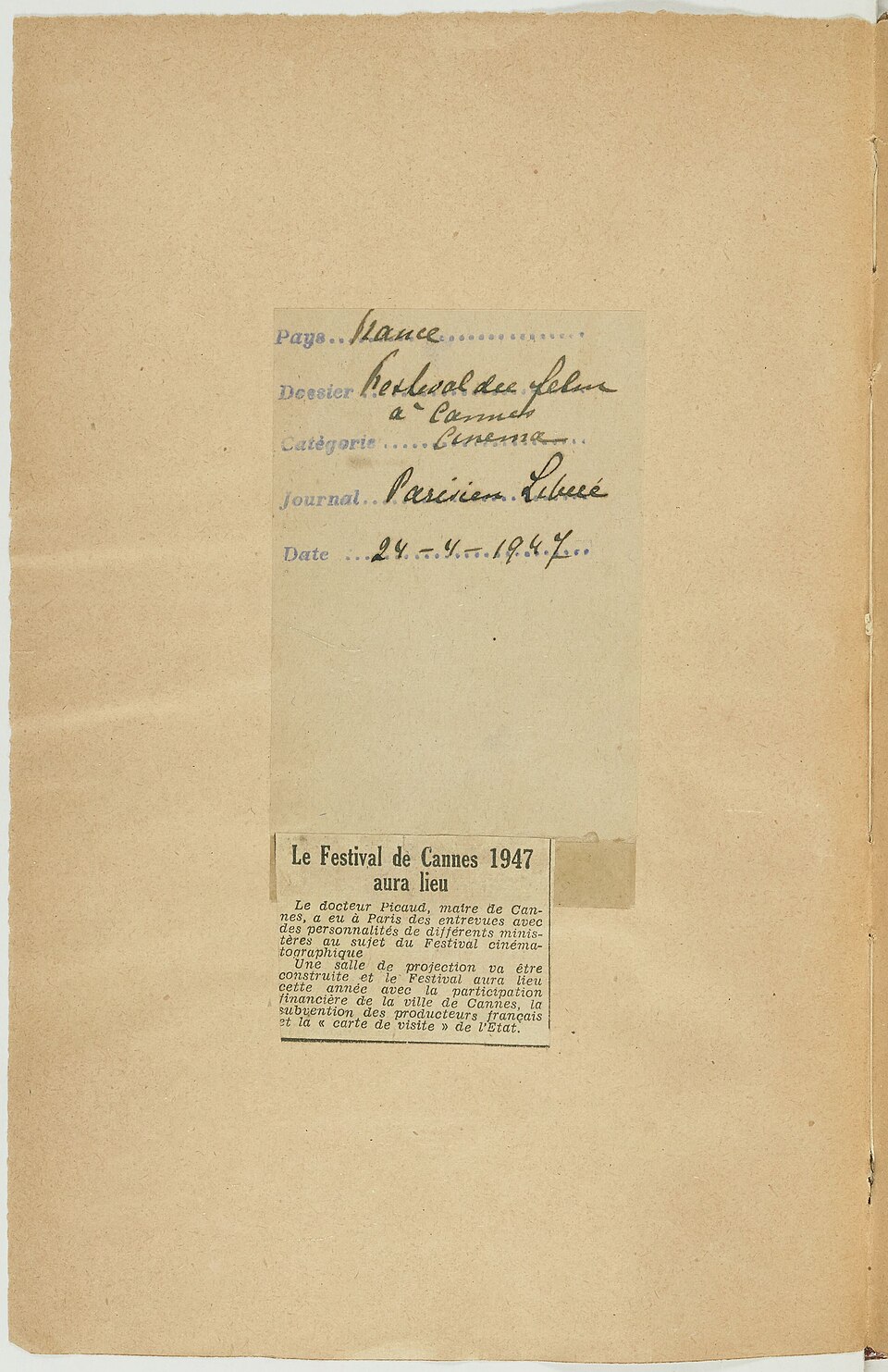
The origins of Cannes are themselves political. Conceived in the late 1930s as an alternative to the Venice Film Festival, which had fallen under the influence of Fascist regimes, Cannes was imagined as a democratic counterweight—a festival that would champion artistic freedom rather than ideological conformity. That founding impulse has never entirely disappeared. Even as the festival has evolved into a global spectacle, it has retained a certain self-conception as a guardian of cinema as an art form, not merely an उद्योग.
In the decades that followed World War II, Cannes became a crucial platform for French filmmakers navigating the shifting terrain of postwar culture. By the time the French New Wave emerged, directors like François Truffaut and Jean-Luc Godard were using Cannes both as a launchpad and as a site of confrontation. The festival didn’t just showcase their films; it amplified their challenge to established cinematic norms. In 1968, that tension reached a breaking point when filmmakers, including Jean-Luc Godard, helped shut down the festival in solidarity with nationwide strikes and protests. Cannes, in that moment, became inseparable from French political life, a reminder that cinema in France has often been treated as something more than entertainment.
What makes Cannes particularly central to French film culture is its dual role. On one level, it is an international marketplace and media event, drawing filmmakers, critics, and industry figures from around the world. On another, it functions as a symbolic home for French cinema itself. French films are not just participants at Cannes; they are part of its identity. When a French director premieres a film there, it carries a different weight—a sense of national representation that is less pronounced for other countries. The Palme d’Or, awarded at Cannes, is not simply a prize; within France, it is a marker of cultural prestige that can define a filmmaker’s place in history.
At the same time, Cannes has helped France maintain its position as a global center of cinematic thought, even as the industry has become increasingly dominated by Hollywood and, more recently, by streaming platforms. The festival’s emphasis on auteurs—directors as the primary creative force—reflects a specifically French understanding of cinema, one rooted in criticism and theory as much as in production. This idea, developed in part through French film journals and intellectual culture, finds its most visible expression each year on the Croisette. Cannes doesn’t just reward films; it reinforces a way of thinking about them.
Yet the relationship between Cannes and French cinema is not purely celebratory. It is also, at times, uneasy. The festival’s global scope means that French films must compete for attention within an increasingly crowded and diverse field. There have been moments when critics within France have questioned whether Cannes still serves national cinema or whether it has become too international, too detached from local realities. And yet, even these criticisms underline its importance. Cannes matters enough to argue about.
Culturally, the festival extends far beyond film itself. It has become a ritualized event within French life, covered extensively by national media and followed closely by audiences who may never attend but still engage with its outcomes. The red carpet, the premieres, the debates—these are not just industry happenings but part of a broader cultural conversation about taste, art, and identity. Cannes, in this sense, operates as a mirror in which France sees both itself and how it is seen by others.
Looking at it from 2026, Cannes appears as both constant and adaptive. It has absorbed changes in technology, shifts in global power, and transformations in how films are made and consumed. But its core function remains remarkably stable: to position France at the center of a global dialogue about cinema. It is a place where French culture asserts its continued relevance, not through dominance, but through curation, taste, and the persistent belief that film is an art worth defending.
In that way, Cannes is less a festival than a statement—one that France has been making, in different forms, for nearly a century.