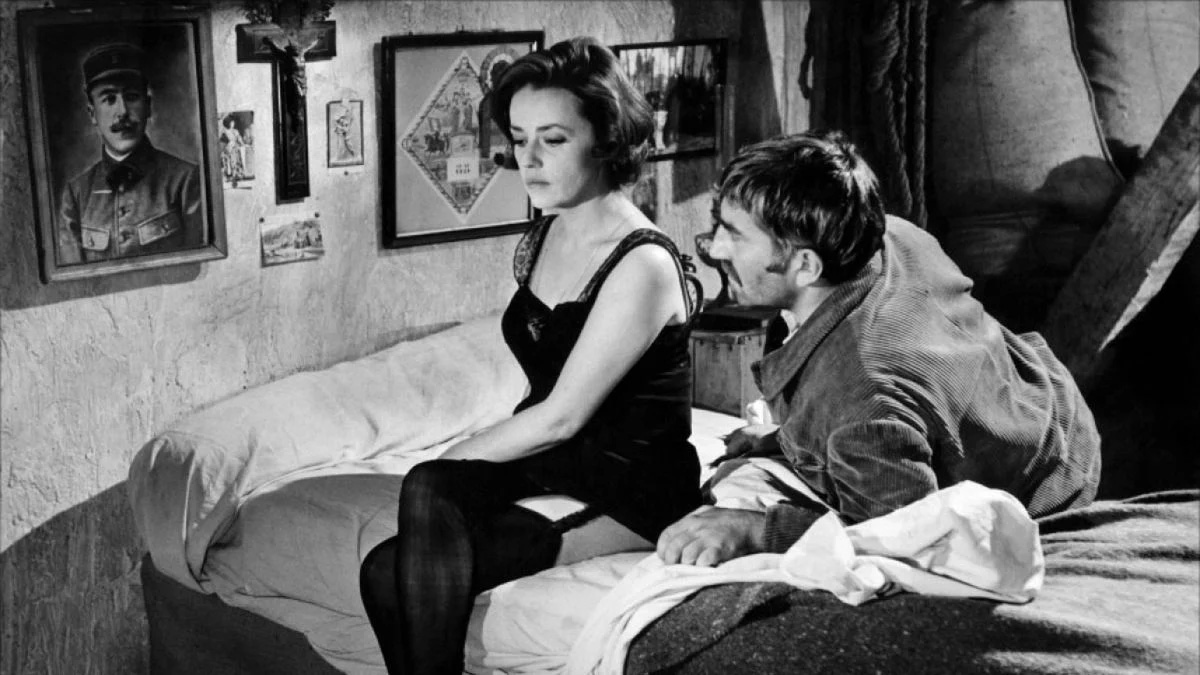
 Image courtesy of France Channel, “Le Journal d’une femme de chambre,” (1964)
Le Journal d'une femme de chambre occupies a singular place in the filmography of Luis Buñuel. Adapted from the novel by Octave Mirbeau, the 1964 film is often overshadowed by Buñuel’s more overtly surrealist works. Yet its originality lies precisely in its apparent restraint. Rather than deploying shocking dream imagery or explicit ruptures of logic, Buñuel embeds his critique within a cool, observational realism. The result is a film that stands apart from his earlier surrealist provocations while preserving their subversive spirit in disguised form. Far from abandoning surrealism, Le Journal d’une femme de chambre internalizes it—transforming shock into social anatomy and dream logic into moral absurdity.
From Surrealist Outrage to Social Precision
Buñuel first gained notoriety through works like Un Chien Andalou and L'Age d'Or, collaborations with Salvador Dali that weaponized irrational imagery against bourgeois complacency. Eyeballs sliced, ants crawling from hands—these films declared war on narrative coherence and moral convention. By contrast, Le Journal d’une femme de chambre appears almost classical. The camera is composed, the storytelling linear, the setting anchored in provincial France at the turn of the twentieth century. Yet this surface normality becomes the film’s strategy. Instead of rupturing reality, Buñuel allows reality to indict itself. The originality lies in the shift from visual surrealism to psychological and ideological surrealism. The grotesque is no longer an image—it is embedded in everyday behavior.
The Bourgeois Home as Theatre of Perversion
The narrative follows Célestine, a chambermaid who enters a provincial household and gradually discovers its hypocrisies and moral decay. Each member of the bourgeois family embodies a different strain of repression or fetishistic obsession. What distinguishes this film from Buñuel’s earlier surrealist works is the absence of overt dream sequences. Instead, perversion emerges through repetition and ritual. The master’s boot fetish, the mistress’s cold propriety, the simmering anti-Semitism and proto-fascism in the surrounding village—all unfold within realistic dialogue and domestic routine. The bourgeois interior becomes a stage where civility masks violence. The film’s originality lies in exposing this contradiction without stylistic flamboyance. The horror is not symbolic; it is social.
Political Undercurrents and Proto-Fascism
A striking dimension of the film is its political foresight. Set before World War I but filmed in the 1960s, it highlights nationalist fervor, xenophobia, and latent fascism in provincial France. The character of Joseph, the servant whose nationalism shades into extremism, embodies the continuity between personal resentment and political radicalization. Buñuel’s surrealist works often attacked the Catholic Church and bourgeois morality through shock. Here, he takes a more insidious route: fascist ideology seeps into the narrative almost casually, normalized within everyday speech. The banality of reactionary ideas becomes more disturbing than any surrealist image. This integration of politics into domestic drama marks the film as unusually grounded within Buñuel’s oeuvre, anticipating the sharper class critiques of his later French films.
Eroticism Without Liberation
Eroticism is central to Buñuel’s cinema, yet in Le Journal d’une femme de chambre it is stripped of romanticism. Desire is transactional, exploitative, or fetishistic. Célestine navigates this landscape with strategic awareness, using her perceived vulnerability to maneuver within rigid hierarchies. Unlike the anarchic eroticism of L’Âge d’Or, here sexuality reinforces structures of power. It reveals the imbalance between servant and master, woman and employer. Buñuel’s originality lies in depicting erotic desire not as explosive rebellion but as another mechanism of control. The absence of overt surrealist spectacle intensifies this critique. The audience cannot dismiss these dynamics as dreamlike exaggeration; they appear embedded in recognizable social codes.
Célestine as Ambiguous Observer
Célestine herself is neither naïve victim nor revolutionary heroine. She observes, adapts, and sometimes manipulates. Her moral position remains ambiguous. Buñuel resists granting her clear ideological superiority over the bourgeois household. This ambiguity reflects a departure from the moral polarization often associated with surrealist satire. The film refrains from overt didacticism. Instead, it allows contradictions to accumulate: the servant may be more perceptive than her employers, yet she is also implicated in the same social games. The originality of the film lies in this refusal of catharsis. There is no explosive liberation, no dream sequence that dismantles hierarchy. Instead, social structures persist—quietly, stubbornly.
Surrealism Reconfigured
If Buñuel’s early surrealism relied on shocking juxtapositions, Le Journal d’une femme de chambre achieves estrangement through tone. The calm framing of disturbing behavior produces a subtle dislocation. The viewer senses absurdity not because logic collapses, but because it continues undisturbed. In this way, Buñuel transforms surrealism into a method rather than a style. The world itself becomes surreal when examined without illusion. Hypocrisy, fetishism, and nationalism appear more irrational than any dream image. This reconfiguration allows the film to stand out within his body of work. It bridges his Spanish surrealist beginnings and his later French satires, such as The Discreet Charm of the Bourgeoisie, where realism and absurdity intertwine seamlessly.
Subversion Through Restraint
Le Journal d’une femme de chambre is original not because it abandons surrealism, but because it conceals it. By adopting a restrained, almost classical narrative style, Buñuel intensifies his critique of bourgeois morality, political reaction, and erotic hypocrisy. The film stands out in his oeuvre as a work of controlled indignation. Instead of slicing through the eye of convention with shocking imagery, Buñuel lets convention expose its own grotesque logic. The result is a film that feels quieter than his early masterpieces—yet perhaps more unsettling. In its measured realism lies its radical edge.