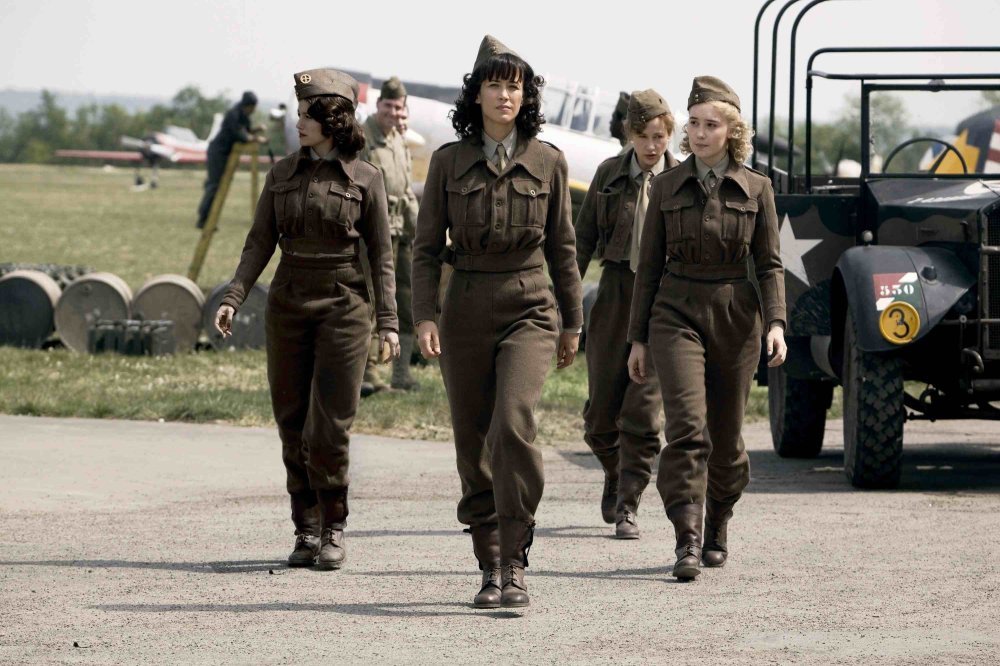
 Image courtesy of France Channel, “Female Agents.” (2008)
The 2008 war film Female Agents (original title Les Femmes de l’ombre), directed by Jean-Paul Salomé and starring Sophie Marceau, occupies a distinctive place among films about the Second World War. Rather than focusing on battlefield heroism or male command structures, the film tells the story of a small group of women recruited into an Allied intelligence operation in Nazi-occupied France.
While the film contains elements of espionage thriller and wartime melodrama, its deeper significance lies in how it foregrounds the historical role of women in resistance networks. By dramatizing a fictionalized mission inspired by real operations, Female Agents highlights the courage, ingenuity, and moral complexity of female resistance fighters—figures whose contributions to World War II were often overlooked in traditional historical narratives.
A Different Kind of War Film
Most war films center on soldiers, generals, and combat operations. Female Agents deliberately shifts the perspective toward clandestine warfare: intelligence gathering, sabotage, and infiltration. Sophie Marceau plays Louise Desfontaines, a member of the French Resistance recruited by British intelligence to assemble a team of women capable of carrying out a dangerous mission behind enemy lines. Their objective is to rescue a captured British agent who possesses crucial information related to the upcoming Allied invasion. The team includes women from different backgrounds—a prostitute, a chemist, a singer, and a nun—each bringing specific skills to the operation. This diversity serves two purposes: it creates dramatic tension within the narrative and it reflects the historical reality that resistance networks drew participants from many walks of life. The film therefore reframes heroism. Instead of professional soldiers, ordinary civilians become agents of strategic warfare.
Women in the Real Resistance
Although Female Agents tells a fictional story, its premise reflects genuine historical structures. During World War II, numerous women worked within resistance and intelligence organizations such as the French Resistance and the British Special Operations Executive (SOE).
These networks relied heavily on women for several strategic reasons. First, women often attracted less suspicion from occupying forces. German soldiers and collaborators frequently underestimated them, allowing female operatives to transport messages, weapons, and explosives.Second, women were crucial as couriers and communication specialists. Resistance groups depended on secret routes, encoded messages, and radio transmissions to coordinate sabotage and intelligence gathering. Finally, women frequently served as organizers—building networks, hiding fugitives, and maintaining safe houses. The film echoes this reality by emphasizing cooperation, trust, and improvisation rather than traditional combat.
Historical Figures Behind the Fiction
While the characters in Female Agents are fictional, they evoke the experiences of real women who played pivotal roles in the resistance. Among the most famous was Violette Szabo, an SOE agent who carried out sabotage missions in France before being captured and executed by the Nazis. Another was Nancy Wake, one of the most decorated women of the war, known for coordinating resistance fighters and leading guerrilla actions against German forces. Women like these were not exceptions but part of a broader network. Historians estimate that thousands of women participated in resistance activities across Europe, often risking torture, imprisonment, or execution. The film’s narrative of an all-female team therefore reflects a deeper historical truth: women were indispensable to the resistance.
Gender and Suspicion
One of the most interesting themes in Female Agents is how gender operates strategically. The women in the film exploit stereotypes imposed upon them by occupying forces. German officers frequently underestimate them, assuming that women are incapable of complex military operations. The protagonists transform this prejudice into a tactical advantage. This dynamic reveals a paradox: the same patriarchal assumptions that marginalized women also created opportunities for resistance. The film repeatedly dramatizes this tension. Characters must navigate social expectations—performing roles of innocence, seduction, or domestic normality—while secretly conducting espionage operations. The result is a form of psychological warfare rooted in gender performance.
The Moral Complexity of Resistance
Another dimension of the film’s originality lies in its portrayal of moral ambiguity. Resistance work often required deception, manipulation, and sometimes sacrifice. The characters are not presented as flawless heroes. They face ethical dilemmas, fear, and internal conflict. Some are motivated by patriotism, others by personal redemption or survival. This complexity mirrors historical reality. Resistance fighters frequently operated under extreme pressure, forced to make decisions with life-or-death consequences for themselves and others. By emphasizing these dilemmas, the film moves beyond patriotic mythmaking and portrays resistance as a fragile, dangerous undertaking.
Remembering Women’s Contributions
For decades after World War II, popular narratives of the conflict focused primarily on male soldiers and battlefield victories. Women’s contributions—particularly in clandestine operations—received less attention. Films like Female Agents help correct this imbalance by placing female fighters at the center of the story. Their roles were crucial not only for symbolic reasons but for practical ones. Resistance networks depended on intelligence gathering, covert communication, sabotage operations, and logistical support. Women participated in all of these activities. In many cases, they faced the same brutal consequences as male fighters if captured: imprisonment, deportation, or execution.
Conclusion: A Story of Hidden Heroism
Female Agents stands out among World War II films because it tells a story that long remained in the shadows. Through the fictional mission of its protagonists, the film highlights the real and significant contributions women made to the Allied struggle against Nazi occupation. By centering female resistance fighters, the film reminds viewers that war is not fought only on battlefields. It is also fought in secret rooms, hidden networks, and acts of quiet defiance. The legacy of these women endures not only in military history but in the broader understanding of courage itself. Their stories reveal that resistance can take many forms—and that some of the most decisive acts of bravery occur far from the front lines.