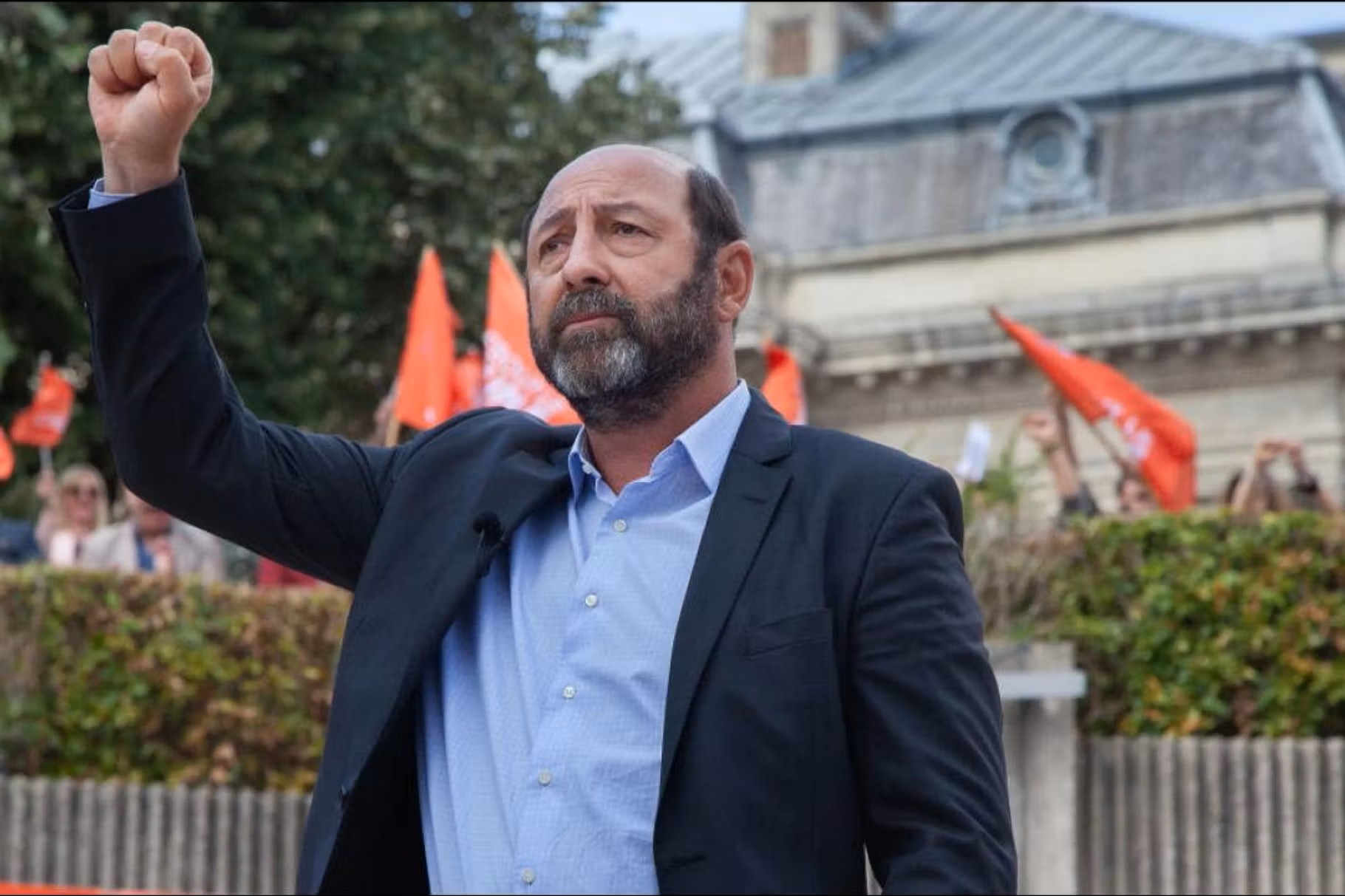
 Image courtesy of France Channel “Baron Noir”
The French television series Baron Noir stands as one of the most incisive contemporary portrayals of political life in France. Premiering in 2016, the show explores not only the mechanics of electoral politics but also the ideological fractures, institutional tensions, and moral ambiguities that define the modern French political landscape. Through its central character, Philippe Rickwaert, the series presents politics not merely as a backdrop, but as the driving force that shapes identity, loyalty, and ambition. French politics is not just depicted in Baron Noir—it is the engine of its narrative and the lens through which the series dissects power itself.
Politics as a System of Power and Survival
At the heart of Baron Noir lies a portrayal of politics as an ecosystem governed by strategy and survival. The protagonist, a Socialist Party mayor from northern France, operates within a highly structured political system dominated by party hierarchies, backroom negotiations, and presidential campaigns. The show captures the mechanics of the Fifth Republic—its strong presidency, party-centered elections, and centralized authority—demonstrating how institutional frameworks shape political behavior. Campaign strategy, polling data, coalition-building, and media manipulation are depicted with granular realism. The presidential race in the series mirrors the real pressures of French politics, where ideological purity often clashes with pragmatic compromise. The show suggests that political survival demands constant recalibration: alliances shift, principles bend, and loyalty becomes transactional. Politics functions less as a forum for ideals and more as a battlefield for influence.
The Crisis of the French Left
A central thematic pillar of Baron Noir is the fragmentation and crisis of the French Socialist movement. The series reflects the real-world decline of the Parti socialiste, which historically dominated French left-wing politics but struggled in the 2010s amid economic discontent and rising populism. The show dramatizes internal divisions between traditional social democrats, pragmatic centrists, and more radical leftist factions. Through Rickwaert’s political maneuvering, the series questions whether the French left can reconcile its ideological heritage with the demands of globalization and neoliberal economics. It portrays a party caught between defending workers in post-industrial regions and appealing to urban, progressive elites. This ideological tension is not abstract. It shapes character motivations, fractures alliances, and drives plot developments. Politics here is ideological warfare within a shared institutional framework.
Populism and the Shadow of the Far Right
Another crucial dimension of French politics in Baron Noir is the rise of nationalist and populist movements. Although fictionalized, the show clearly evokes the influence of parties like the Front National (now known as the Rassemblement National). The series situates its narrative within a France grappling with economic stagnation, immigration debates, and regional disenfranchisement—fertile ground for populist rhetoric. By incorporating far-right electoral threats, the series underscores the vulnerability of mainstream parties. Political actors must decide whether to confront populism ideologically, co-opt parts of its rhetoric, or strategically manipulate its rise for personal gain. The show resists caricature; instead, it portrays populism as a structural consequence of political and economic disillusionment. In doing so, Baron Noir reflects broader European anxieties and situates French politics within a continental trend of democratic instability.
The Fifth Republic and Presidential Centrality
French politics under the Fifth Republic is inherently presidential, and the series makes this institutional reality central to its drama. The constitutional structure established by Charles de Gaulle concentrates power in the presidency, making presidential elections pivotal moments that reshape the political landscape. In Baron Noir, presidential campaigns become high-stakes arenas where personal ambition intersects with national destiny. The show meticulously portrays how access to the presidency determines policy direction, party cohesion, and the fate of political careers. The centralization of executive power amplifies the personal dimension of politics; betrayal at the top reverberates across the entire system. This emphasis reflects a distinctive feature of French political life: while parliamentary systems often diffuse authority, the French model magnifies it, intensifying both opportunity and risk.
Morality, Corruption, and Political Realism
Perhaps the most striking role of French politics in the series is its moral ambiguity. Baron Noir rejects simplistic narratives of good versus evil. Instead, it presents politics as a realm where ethical compromise is normalized. Financial scandals, manipulation of the judiciary, and opportunistic alliances are portrayed not as anomalies but as systemic temptations embedded within political competition. The show aligns with a tradition of political realism, suggesting that power often corrupts—not necessarily through villainy, but through incremental concessions to expediency. Rickwaert is neither hero nor villain; he embodies the contradictions of a system that rewards cunning over virtue. This moral complexity reflects broader public skepticism toward political elites in France, especially in the aftermath of corruption scandals and declining trust in institutions.
Politics as Identity and Tragedy
Beyond strategy and ideology, French politics in Baron Noir is deeply personal. Political engagement shapes identity, relationships, and emotional life. The protagonist’s dedication to political maneuvering comes at personal cost—friendships deteriorate, romantic relationships falter, and trust becomes scarce. Politics is portrayed as all-consuming. It defines social status, regional identity (particularly in economically depressed northern France), and generational aspirations. In this sense, the series suggests that in the French context—where intellectual debate and political engagement are culturally prominent—politics becomes existential. The tragedy of Baron Noir lies in this fusion of personal and institutional ambition. The more power characters accumulate, the more isolated they become.
French Politics as Structural Drama
In Baron Noir, French politics is not mere context—it is the central dramatic structure. The series captures the ideological fragmentation of the left, the ascent of populism, the power dynamics of the Fifth Republic, and the moral ambiguities of modern governance. By grounding its narrative in recognizable institutions and political currents, it achieves a realism rarely matched in political television. Ultimately, Baron Noir presents French politics as a complex, adaptive system—simultaneously ideological and opportunistic, democratic yet vulnerable. In doing so, it offers not just entertainment, but a penetrating analysis of contemporary France and the fragile machinery of power that sustains its republic.