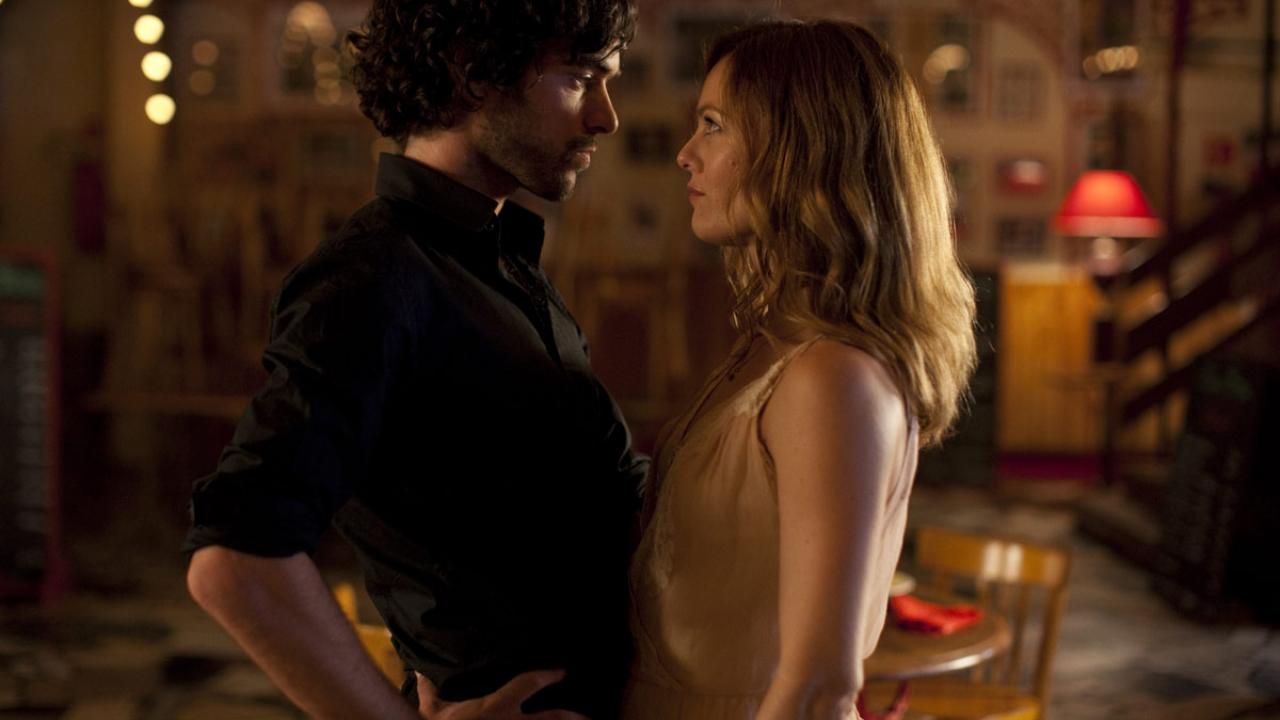
 Image courtesy of France Channel, “L’Arnacoeur” (2010)
Released in 2010, L'Arnacoeur (Heartbreaker), directed by Pascal Chaumeil and starring Romain Duris and Vanessa Paradis, might initially appear to be a textbook romantic comedy. Its premise—a professional “heartbreaker” hired to sabotage unsuitable relationships—seems tailor-made for familiar tropes: deception leading to love, opposites attracting, the inevitable emotional reckoning. Yet the film’s originality lies precisely in how deftly it embraces, manipulates, and reorients these clichés. Rather than attempting to escape genre conventions, L’Arnacœur plays within them with unusual intelligence and tonal control. It demonstrates that originality in romantic comedy does not require rejecting formulas, but understanding them deeply enough to bend them without breaking their pleasure.
The High-Concept Premise as Moral Framework
The film’s central conceit—a trio who intervene to break up couples when the woman appears unhappy—provides a narrative engine that is both comic and ethically ambiguous. At first glance, this setup resembles the farcical plots of classic screwball comedies. However, the film grounds the concept in a quasi-ethical code: the team refuses to target happy couples. This rule introduces a moral tension that complicates the expected trajectory. The protagonist, a charming manipulator, operates with apparent cynicism, yet insists on emotional authenticity as his justification. The audience is invited to question whether such authenticity can coexist with deception. By embedding ethical boundaries within a seemingly outrageous premise, the film avoids descending into pure farce. The cliché of the con artist falling in love gains a layer of introspection: what happens when someone who manufactures romance encounters genuine feeling?
The Art of Controlled Cliché
Romantic comedies are built on repetition—meet-cutes, misunderstandings, grand gestures. L’Arnacœur acknowledges this architecture and leans into it knowingly. The Monaco setting, luxury hotels, glamorous parties, and sunlit Mediterranean vistas evoke the escapist sheen of Hollywood romances. Yet the film subtly destabilizes these surfaces. The heroine is not naïve; she is intelligent, economically independent, and emotionally perceptive. The hero, for all his swagger, is financially precarious and emotionally adrift. This inversion complicates the gender dynamic typical of the genre. Even the obligatory montage sequences are handled with irony. A dance scene set to a nostalgic pop anthem becomes both comic spectacle and sincere bonding moment. The film allows the cliché to unfold fully, but layers it with self-awareness and character depth.
Performance and Physical Comedy
A major component of the film’s originality lies in performance. Romain Duris brings kinetic physicality to the role of the heartbreaker. His exaggerated seduction techniques—studied gazes, rehearsed empathy, choreographed charm—border on parody. Yet Duris injects vulnerability beneath the bravado. Vanessa Paradis counters with controlled poise. Her character’s composure gradually softens, but never collapses into passivity. The chemistry between the two actors rests on timing rather than melodrama. Comic beats arise from hesitation, glances, and small reversals of expectation. The film thus balances stylized physical comedy with emotional realism. It avoids the shrillness that can plague high-concept romantic plots, opting instead for modulation.
Genre Hybridity: Between Capers and Romance
Another dimension of the film’s originality is its hybrid structure. L’Arnacœur incorporates elements of the caper film—planning, surveillance, disguises—into the romantic comedy framework. This fusion energizes the pacing and broadens the narrative stakes beyond the central couple. The protagonist’s professional team adds rhythm and texture. Their logistical challenges and looming financial debts introduce urgency that prevents the romance from feeling insular. The film becomes not just a love story, but a story about performance—romantic, professional, and social. This blending of genres refreshes familiar beats. The audience is invested not only in whether the couple will unite, but in whether the elaborate con will unravel.
Masculinity Reimagined
Romantic comedies often hinge on the transformation of male immaturity into emotional responsibility. L’Arnacœur participates in this arc but complicates it. The hero’s profession is rooted in emotional manipulation—a hyperbolic extension of stereotypical male avoidance of commitment. However, the film frames his growth not as domination but as surrender. His eventual vulnerability is not triumphant; it is destabilizing. He must abandon performance and risk rejection. This portrayal subtly critiques performative masculinity. Seduction techniques, choreographed charm, and emotional scripts are revealed as hollow compared to genuine exposure. The film thus turns its own premise inside out.
Emotional Sincerity Beneath Irony
What ultimately distinguishes L’Arnacœur is its tonal balance. It never mocks the genre it inhabits. While it plays with clichés, it does so affectionately. The grand romantic gesture remains intact, but its impact derives from earned sincerity rather than mechanical inevitability. The film trusts the audience to enjoy formula without condescension. In doing so, it demonstrates that clichés endure because they resonate. Originality emerges not from discarding them, but from infusing them with specificity and emotional truth.
Mastery Through Play
L’Arnacœur stands out among contemporary romantic comedies because it understands its own architecture. By blending caper elements with romance, inverting gender expectations, and grounding spectacle in nuanced performances, it transforms familiar tropes into sources of renewed pleasure. Its originality is subtle rather than radical. It does not dismantle the romantic comedy; it refines it. Through deft handling of cliché, controlled irony, and genuine emotional stakes, the film proves that innovation often lies not in rejecting tradition—but in playing it with intelligence and grace.