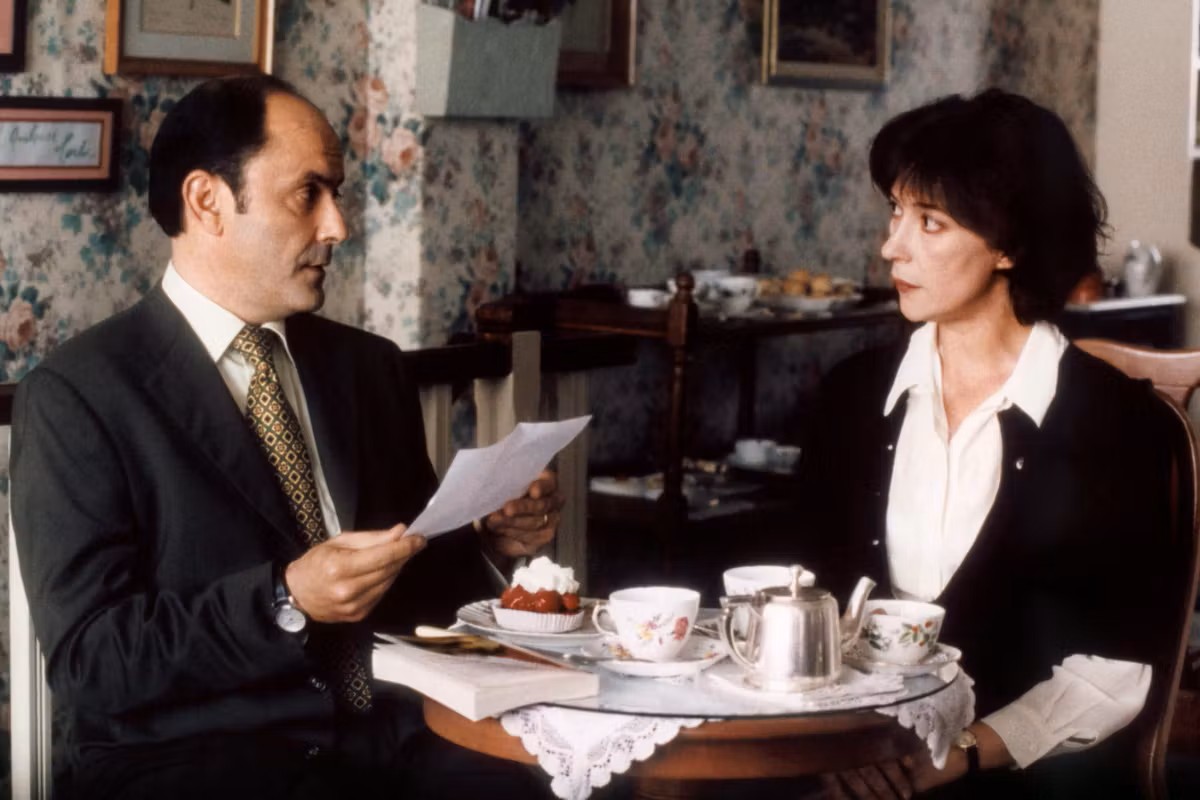
 Image courtesy of France Channel, “Le Goût des autres” (2000)
The 2000 film Le Goût des autres (The Taste of Others), directed by Agnès Jaoui and co-written with Jean-Pierre Bacri, stands as one of the most incisive social comedies in contemporary French cinema. At first glance, it appears modest: a story of intersecting lives, cultural misunderstandings, and romantic hesitations. Yet beneath its understated realism lies a layered, often uncomfortable humor rooted in class anxiety, intellectual insecurity, and emotional illiteracy. The film’s comedy is not explosive or gag-driven. Instead, it emerges from pauses, tonal shifts, and the friction between social worlds. In this sense, Le Goût des autres exemplifies a distinctly French comedic tradition—where wit exposes vulnerability rather than simply provoking laughter.
Humor as Social Diagnosis
The title itself—“The Taste of Others”—signals the film’s thematic preoccupation: how aesthetic preference becomes a marker of identity and social belonging. The central character, a provincial businessman, finds himself increasingly drawn into the world of theater, literature, and urban intellectualism. His lack of cultural fluency produces moments of awkwardness that are at once funny and painful. The humor arises from misalignment. Conversations falter because participants assume shared codes that do not exist. A reference to a playwright, a casual remark about modern art, or a dinner-table debate about taste becomes charged with class tension. Rather than mocking ignorance outright, the film reveals how cultural capital functions as a gatekeeping mechanism. Laughter is tinged with discomfort because it exposes how easily taste becomes a form of exclusion.
Jean-Pierre Bacri: Irritation as Comedy
Jean-Pierre Bacri’s performance style is central to the film’s tone. Known for portraying gruff, irritable men masking emotional fragility, Bacri transforms irritation into a comedic instrument. His character’s bluntness—often delivered through muttered asides or exasperated silences—creates humor through understatement. Yet this irritation is never purely cynical. Beneath the brusque exterior lies a longing for recognition and connection. Bacri’s comedic genius lies in his ability to oscillate between abrasiveness and vulnerability within a single scene. The audience laughs not because he is cruel, but because his defensiveness is so transparently human. His humor resists exaggeration. Instead of punchlines, he offers micro-reactions: a raised eyebrow, a sigh, a pause that stretches just long enough to expose social absurdity.
The Chabat Contrast: Elasticity and Absurdity
Although Alain Chabat is not a central performer in Le Goût des autres, the idea of a creative “meeting of minds” between Chabat and Bacri invites a compelling comparison of comic sensibilities within French cinema. Chabat, known for his elastic physicality and surreal playfulness (notably in works like Astérix & Obélix: Mission Cléopâtre), represents a more overtly absurdist tradition. His humor often embraces caricature, rapid-fire wordplay, and visual exaggeration. Bacri, by contrast, anchors comedy in realism and emotional tension. Placing these sensibilities in dialogue highlights the spectrum of French comic art. Where Chabat leans toward flamboyant absurdity, Bacri excavates the tragicomic depths of ordinary life. Both approaches interrogate social norms, but through different tonal registers. The “meeting” between their comic spirits, then, is less about collaboration within a single film and more about complementary philosophies: one destabilizes through exaggeration; the other through recognition.
Comedy of Insecurity
A defining feature of Le Goût des autres is its refusal to position any character as fully secure in their cultural identity. Intellectuals are shown to be pretentious and anxious about status. Businesspeople feel out of place in artistic circles. Actors question their own legitimacy. The humor derives from insecurity rather than superiority. Scenes often unfold with a rhythm of miscommunication: a compliment that sounds condescending, a joke that lands poorly, a silence that becomes unbearable. The film’s script—co-written by Jaoui and Bacri—carefully orchestrates these exchanges so that laughter arrives slowly, almost reluctantly. This structure complicates the traditional function of comedy as escapism. Instead, it functions as social observation. The audience recognizes their own anxieties in the characters’ attempts to belong.
Love, Language, and the Limits of Taste
Romantic desire in the film is inseparable from questions of taste. Attraction is filtered through cultural admiration—or insecurity about lacking it. The businessman’s interest in an actress is not purely romantic; it is entangled with his fascination with her world. The film subtly asks: can love transcend differences in education and aesthetic sensibility? Or does taste inevitably become a barrier? Humor mediates this question. By rendering awkward courtship attempts gently comic rather than tragic, the film opens space for empathy. Laughter softens the rigidity of social categories, even as it exposes their persistence.
A Democratic Comedy
Perhaps the most radical aspect of Le Goût des autres is its democratic impulse. No character is reduced to a caricature of class or profession. Each is granted interiority. The film’s humor equalizes rather than humiliates. This ethical dimension distinguishes it from more satirical works that rely on ridicule. Instead, the comedy insists on mutual fallibility. Everyone misreads situations. Everyone performs to some degree. Everyone fears judgment. In this sense, the film’s subtlety aligns with Bacri’s performance style: restrained, humane, attentive to contradiction.
The Art of Comic Nuance
Le Goût des autres exemplifies a form of humor that is at once social critique and emotional inquiry. Its comedy unfolds in gestures, pauses, and conversational misfires rather than overt spectacle. Through Jean-Pierre Bacri’s finely calibrated performance and Agnès Jaoui’s perceptive direction, the film transforms everyday awkwardness into art. When considered alongside the broader French comic landscape—including the exuberant absurdism associated with Alain Chabat—the film reveals the richness of contemporary French humor. Bacri’s realism and Chabat’s elasticity represent different but complementary modes of dissecting society. Ultimately, Le Goût des autres suggests that humor is not merely about making others laugh. It is about recognizing oneself in the discomfort of others—about discovering, sometimes painfully, the limits and possibilities of shared taste.