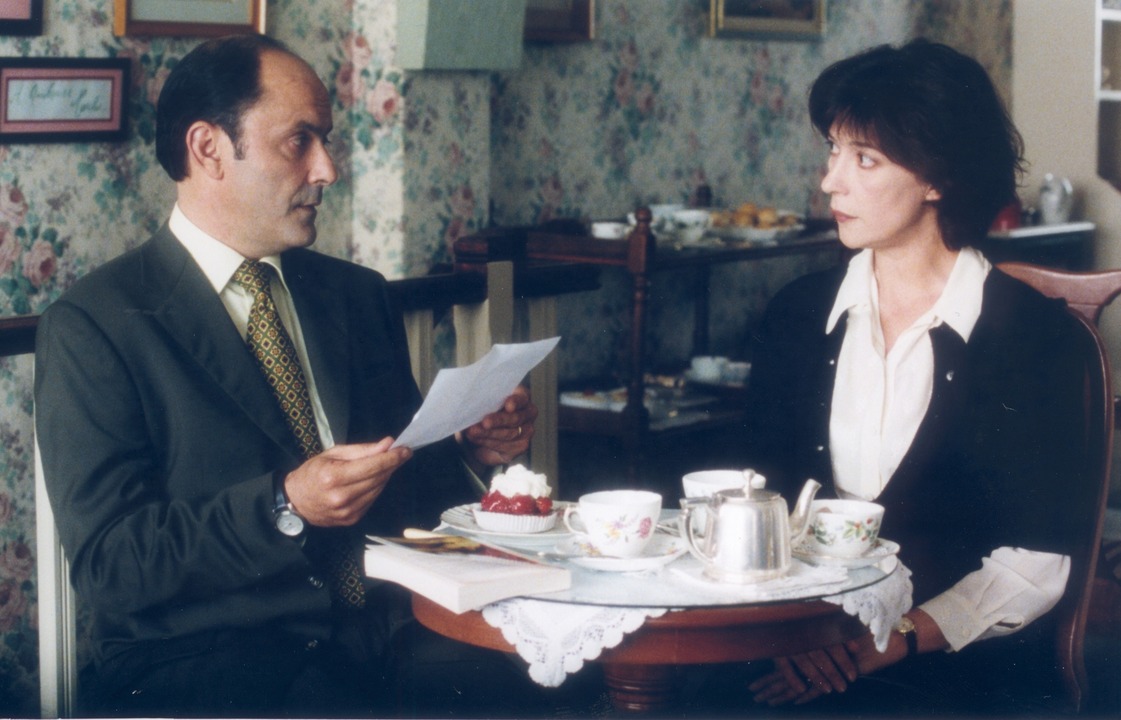
 Image courtesy of France Channel, “Le goût des autres,” (2000)
France and England have spent centuries cultivating an amusing mixture of rivalry, fascination and mutual influence. Their differences are often exaggerated: the French are supposedly passionate and intellectual, the English reserved and ironic; one nation worships its food, while the other survives on tea and sandwiches. Yet spend enough time in both countries and a more interesting picture emerges. Beneath the familiar stereotypes, the French and the English share a surprising number of social habits, mannerisms and everyday eccentricities.
From the art of complaining about the weather to the importance of a well-timed remark, from elaborate rituals around food and drink to a complicated relationship with politeness, the two cultures often resemble one another in ways that neither might immediately recognise. These similarities are not always identical in form, but they frequently serve the same social purpose.
1. The Art of Complaining as a Social Bond
Few activities unite the French and the English quite as effectively as complaining.
In Britain, the weather remains an inexhaustible conversational resource. A little rain, an unexpected heatwave or an unusually grey afternoon can provide an entire exchange between strangers. The complaint is rarely intended as a serious grievance. Rather, it is a convenient way of acknowledging another person, establishing common ground and demonstrating an awareness of one's surroundings.
France has its own equivalent, although the subjects can be more varied. The weather certainly qualifies, but so do public transport, administrative bureaucracy, the price of things, the quality of a restaurant or the latest political controversy. A delayed train is not merely an inconvenience: it is an opportunity to discuss the state of the country.
There is, however, an important similarity. In both cultures, complaining can function as a form of social participation. One does not necessarily expect the situation to improve. The pleasure lies partly in having identified the problem together.
The British tendency towards understatement can make a complaint sound almost affectionate, while French grumbling can become a more elaborate performance of indignation. Yet both traditions recognise the value of a shared grievance.
In either country, a conversation about an irritating public service can develop into an unexpectedly convivial encounter.
2. Politeness Is More Complicated Than It Looks
The French and the English are both highly attentive to manners, although they often express politeness differently.
In England, the words “please”, “thank you” and “sorry” are woven into everyday interactions. An English person might apologise when someone else bumps into them, when they need to interrupt a conversation or when they have done nothing wrong whatsoever. The apology often functions less as an admission of fault than as a way of managing the social atmosphere.
French politeness, meanwhile, places considerable importance on greetings and the formal recognition of another person. Entering a shop without saying bonjour can seem conspicuously abrupt, while the distinction between tu and vous helps establish the appropriate degree of familiarity.
Both cultures therefore understand that social interaction involves more than the literal information being exchanged. The manner in which something is said can be as important as the words themselves.
There is also a shared suspicion of excessive familiarity. The English may express it through reserve or an insistence on personal space; the French may express it through the conventions of formal address. In both cases, politeness helps establish boundaries.
The difference is that English politeness can sometimes conceal discomfort behind an apology, whereas French politeness may place greater emphasis on observing the appropriate social ritual from the outset.
Neither approach is necessarily more sincere. Both provide a framework for negotiating everyday relationships.
3. The Shared Pleasure of a Little Intellectual Superiority
Another intriguing crossover is the pleasure both cultures can take in demonstrating that they know something the other person does not.
ends on pretending not to perform at all.
In France, intellectual discussion has a particularly visible place in public culture, from the tradition of the literary café to political debate and the prestige historically attached to philosophical argument. A conversation about cinema, literature or politics can become an opportunity to demonstrate not only one's opinions but one's ability to defend them.
It would be misleading to suggest that the French are inherently more intellectual or the English less interested in ideas. Both countries have rich traditions of public debate, literary culture and intellectual satire.
The more interesting similarity is that knowledge can function as a social performance in both cultures.
The English person who casually mentions a difficult novel, then insists that it was “rather interesting”, and the French person who turns a discussion of a film into a debate about its philosophical implications are participating in related social games. Each may be displaying knowledge while attempting to appear as though doing so is entirely natural.
There is humour in the performance, particularly when the audience recognises how carefully the apparent spontaneity has been constructed.
4. The Ritual of Coffee
Coffee provides another striking example of cultural overlap.
In France, the café has traditionally been a place to sit, talk, read, observe passers-by and spend time without necessarily having a particular objective. A coffee is not always a beverage consumed on the way to somewhere else. It can be an excuse to occupy a table and participate in the life of the street.
Britain has developed its own café culture, particularly in London, where independent coffee shops increasingly serve as places to work, read, meet friends or simply spend an afternoon.
The traditions differ. The Parisian espresso at a pavement café and the London flat white in a neighbourhood coffee shop do not necessarily imply the same social expectations. Yet both reflect the idea that a public space can become an extension of one's personal routine.
There is also a shared appreciation of the ritual itself: choosing a place, ordering something familiar and allowing a little time to pass.
The coffee is only part of the experience. The surroundings, the company and the opportunity to watch other people are equally important.
In both countries, a café can be a place where doing very little becomes a perfectly legitimate way to spend an hour.
5. The Importance of Food Beyond Mere Sustenance
The French reputation for gastronomic seriousness is well established, but the English also attach considerable social significance to food.
The Sunday roast, afternoon tea, the pub lunch and the Christmas dinner are all examples of meals that carry meanings beyond their ingredients. They structure time, establish traditions and provide opportunities for family and friends to gather.
France has its own rituals: the extended lunch, the apéritif, the Sunday family meal and the importance of particular dishes associated with regional identity or seasonal celebrations.
In both countries, food can become a means of expressing belonging. Knowing what to serve, when to serve it and how long a meal should last can communicate familiarity with a social world.
Both cultures also distinguish between eating because one is hungry and eating because the occasion demands it.
A French lunch may develop into a long conversation, while an English Sunday roast can become the centrepiece of an entire afternoon. In either case, the meal creates a temporary structure around which social life can organise itself.
And both countries have their food snobs, their traditionalists and their enthusiastic defenders of dishes that outsiders may find difficult to understand.
The French may debate the proper preparation of a particular regional speciality; the English may defend the precise composition of a full breakfast. The subjects differ, but the underlying conviction that food matters is remarkably similar.
6. Irony, Indirectness and the Things Left Unsaid
The French and the English both possess sophisticated traditions of irony, although the conventions surrounding them can differ.
English humour frequently relies on understatement. A disaster can be described as “a bit unfortunate”, while a spectacularly bad decision may be met with a remark such as “Well, that was clever”.
French irony can be more direct, particularly in satire and intellectual debate, but it also makes extensive use of implication, mock seriousness and the deliberate exaggeration of an argument.
In everyday conversation, both cultures can communicate criticism without stating it in entirely literal terms. A raised eyebrow, a particular intonation or a carefully chosen phrase may convey far more than its dictionary definition suggests.
This is one reason misunderstandings can occur between the two cultures. Someone accustomed to English understatement may interpret a French speaker's directness as hostility, while someone accustomed to more explicit verbal expression may fail to recognise that an English person's apparently mild remark is actually a substantial criticism.
Yet the underlying social skill is similar: understanding what is being communicated beyond the literal sentence.
Both cultures reward people who can recognise a joke without needing it explained, and both can use humour to express disagreement while preserving a degree of social distance.
7. The Pleasure of Being Slightly Difficult
There is a certain kind of person who seems to take pleasure in refusing to make things entirely easy for other people.
In Britain, this might appear as dry resistance to enthusiasm, an insistence on doing things “properly” or an instinctive suspicion of anything described as revolutionary. In France, it might take the form of challenging a rule, questioning an authority or refusing to accept an arrangement simply because somebody has declared it necessary.
These tendencies are not universal, of course, and they should not be confused with a complete description of either national character. But both cultures have traditions that celebrate a certain degree of independence from authority.
The English have a long history of satire directed at institutions, bureaucracy and pompous individuals. French political and literary culture similarly celebrates the capacity to question established power.
The difference often lies in how resistance is expressed. British scepticism can take the form of a joke, a shrug or a quiet refusal to be impressed. French scepticism can be more openly argumentative, sometimes developing into a public debate about the legitimacy of the rules themselves.
But both traditions share an instinct to resist being told what to think.
There is, moreover, a comic pleasure in refusing to cooperate with something that is obviously ridiculous. The refusal itself becomes a statement of personality.
8. The Complicated Relationship with Strangers
The French and the English can both appear reserved to outsiders, although the reasons and manifestations vary.
In England, strangers often maintain a certain distance in public. People may avoid unnecessary conversation on public transport, hesitate before addressing someone they do not know and use small talk as a gradual introduction rather than an invitation to immediate intimacy.
In France, public interactions can also involve clearly defined boundaries, particularly in formal settings. Yet greetings and brief exchanges may be more explicitly ritualised, and a conversation can become animated once the appropriate social conventions have been established.
In both countries, there is a difference between being friendly and being familiar.
A person can be perfectly courteous without wanting to become your friend. A lively conversation does not necessarily imply an invitation into someone's private life. And a relationship may require time before it moves beyond the conventions of polite acquaintance.
This distinction is particularly important when comparing cultures because warmth can be expressed in different ways. An English person may show consideration by avoiding intrusion; a French person may show it by acknowledging the other person properly before proceeding.
Neither behaviour should automatically be interpreted as coldness.
Both cultures have their own ways of balancing sociability with personal boundaries.
9. A Shared Appreciation of Eccentricity
Both England and France have produced cultural traditions that celebrate the eccentric individual.
British literature and comedy are filled with peculiar characters whose habits, obsessions and mannerisms distinguish them from everyone around them. From the absurd figures of Monty Python to the characters of classic British sitcoms, eccentricity is often a source of both humour and affection.
French comedy has similarly celebrated exaggerated personalities, obsessive behaviour and people who refuse to behave according to ordinary expectations. Louis de Funès, for example, built much of his comic appeal around characters whose vanity, impatience and exaggerated reactions turn everyday situations into chaos.
In both traditions, the eccentric person can expose the absurdity of social conventions simply by taking their own peculiarities to extraordinary lengths.
There is also a shared recognition that eccentricity is often more entertaining than conformity. The person who insists on a bizarre routine, takes a trivial matter extraordinarily seriously or develops an elaborate theory about something insignificant can become a memorable comic figure.
The two cultures may differ in the particular characters they celebrate, but both understand that human idiosyncrasies are a rich source of comedy.
10. The Ritual of Not Being Entirely Impressed
Perhaps one of the most revealing similarities between the French and the English is their complicated relationship with enthusiasm.
Both cultures can be suspicious of people who appear excessively impressed by things. In England, an understated response can communicate good taste or social composure. In France, a critical attitude can demonstrate discernment, independence of thought or an unwillingness to accept conventional opinions without examination.
This does not mean that either culture lacks enthusiasm. Both have passionate sports supporters, devoted film enthusiasts, committed political activists and people who become extraordinarily animated about their interests.
The distinction concerns how enthusiasm is socially expressed.
In some contexts, an English person may feel compelled to soften praise with a qualification, while a French person may instinctively discuss the merits and shortcomings of a film, restaurant or artistic work rather than simply declaring it wonderful.
Both approaches can produce lively criticism, and both can sometimes make genuine pleasure seem suspiciously uncritical.
There is an amusing contradiction here: people can be extremely passionate about demonstrating that they are not easily impressed.
11. National Rivalry as a Form of Affection
The relationship between France and England has been shaped by centuries of conflict, competition and political disagreement. Yet this history has also created a shared vocabulary of jokes, stereotypes and mutual fascination.
The English joke about French bureaucracy, food, intellectualism or supposed arrogance. The French joke about British weather, food, reserve or eccentricity. These stereotypes are often exaggerated, but their familiarity can become a form of cultural shorthand.
The important distinction is between affectionate teasing and genuine hostility. A joke about national habits can acknowledge a difference while simultaneously demonstrating familiarity with the other culture.
Cinema offers particularly good examples of this dynamic. Gérard Oury's La Grande Vadrouille turns the relationship between British airmen and French civilians during the Second World War into a comedy of misunderstandings, contrasting temperaments and unexpected cooperation. Its humour depends partly on national differences, but those differences ultimately become part of a shared adventure.
The film demonstrates how comedy can make historical relationships feel personal. Instead of presenting the Franco-British alliance solely through diplomacy or military strategy, it imagines what happens when ordinary people from different cultures have to rely on one another.
Their differences are funny, but they do not prevent friendship.
Conclusion: Two Cultures That Recognise Themselves in Each Other
The French and the English are often described through contrasts: reserved versus expressive, ironic versus argumentative, understated versus theatrical. These distinctions can be useful, but they risk overlooking the everyday habits that connect the two cultures.
Both appreciate the social value of complaining, the importance of food and drink, the subtleties of politeness, the pleasures of irony and the comic possibilities of human eccentricity. Both can be sceptical of authority, proud of their cultural traditions and suspicious of excessive self-importance. Both use humour to negotiate social boundaries and to make sense of the absurdities of everyday life.
The differences remain important. French social rituals are not interchangeable with English ones, and the same gesture or expression can carry different meanings on either side of the Channel. But recognising those distinctions need not obscure the similarities.
Perhaps the most interesting cultural crossover is the shared ability to turn ordinary behaviour into a social performance. A complaint about the weather, an argument about lunch, an ironic remark or a refusal to be impressed can all become ways of establishing common ground.
The French and the English may express these habits differently, but they often understand the underlying game.
And that may be the most enduring connection between them: two neighbouring cultures that have spent centuries disagreeing, borrowing from one another, making fun of one another and discovering, sometimes reluctantly, that they have rather a lot in common.