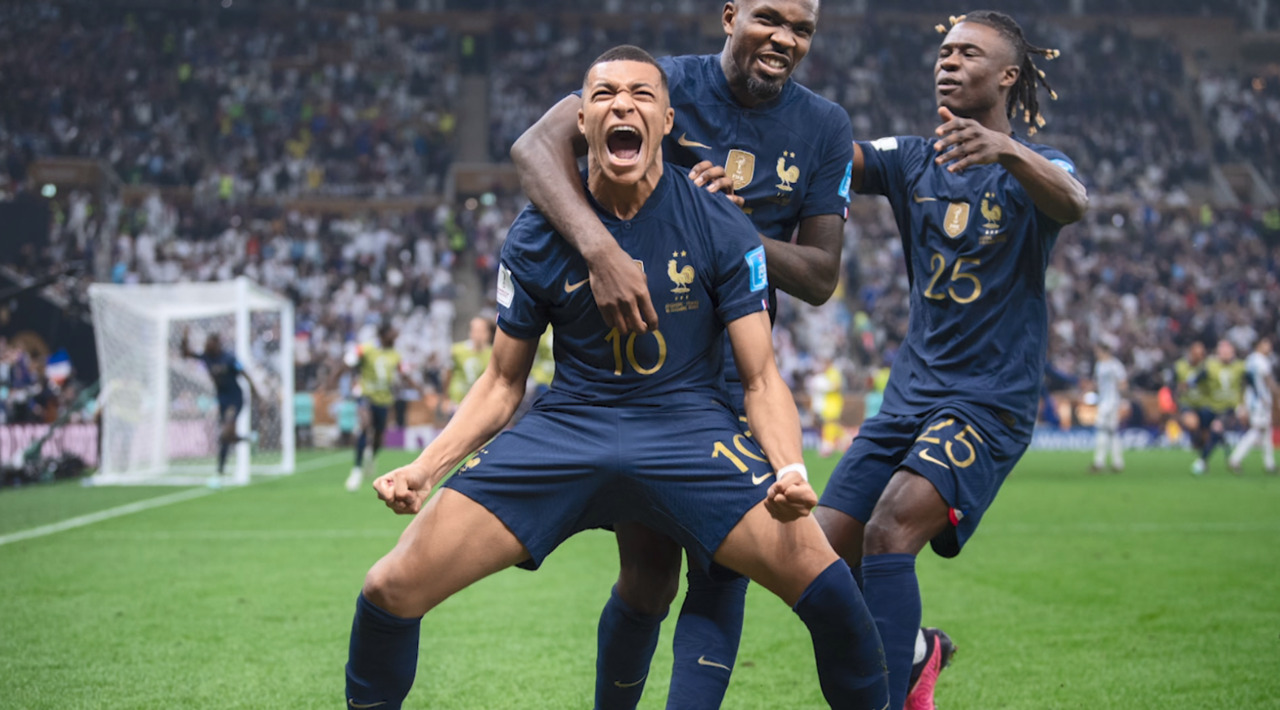
 Image courtesy of France Channel, “Football’s Greatest Stage: Kylian Mbappé”
For many nations, the FIFA World Cup is the pinnacle of sporting competition. For France, it is something even greater: a moment when history, identity, culture, and national aspiration converge on the global stage. Over nearly a century of participation, France has become one of the most influential and successful countries in World Cup history. From hosting the tournament to winning multiple championships and producing some of the sport's greatest players, France's relationship with the World Cup reflects the evolution of the nation itself. The significance of French participation cannot be measured solely in victories or trophies. Rather, it lies in the way football has become a powerful expression of national unity, diversity, excellence, and international influence.
A Founding Nation of World Football
France occupies a unique place in the history of international football. French administrators and visionaries played a central role in the creation of the FIFA World Cup itself. Jules Rimet, the French president of FIFA from 1921 to 1954, was the driving force behind the establishment of a global championship that would bring nations together through sport. When the first World Cup was held in Uruguay in 1930, France was among the participating nations. This early involvement reflected France's longstanding commitment to international cooperation and sporting competition. As a result, France is not merely a participant in World Cup history—it is one of the architects of the tournament's existence.
Football as a Reflection of the French Republic
One reason the World Cup carries such meaning in France is that the national team often serves as a reflection of the country's republican ideals. The French Republic is founded upon principles of citizenship, equality, and national unity. The national football team provides a highly visible example of these values in action. Throughout modern history, French teams have brought together players from diverse geographic, cultural, religious, and family backgrounds, united by a common commitment to represent France. When players wear the blue jersey of the national team, they embody a simple but powerful idea: that national identity is defined not by origin, but by shared citizenship and common purpose. For millions of French supporters, this symbolism gives World Cup participation a significance that extends far beyond sport.
The Triumph of 1998: A Defining National Moment
No World Cup has had a greater impact on modern French identity than the tournament hosted by France in 1998. Led by captain Didier Deschamps and inspired by the brilliance of Zinedine Zidane, France captured its first World Cup title by defeating Brazil in the final. The victory generated scenes of celebration across the country unlike anything seen in modern French sport. Millions of citizens gathered in public squares and along the Champs-Élysées to celebrate a shared national achievement. The 1998 team became internationally recognized as a symbol of a diverse and modern France. While historians and sociologists continue to debate the broader social implications of that moment, there is little doubt that the victory created a powerful sense of national pride and collective optimism. For many French citizens, 1998 remains one of the most cherished moments in contemporary national history.
The Global Influence of French Football
France's success in the World Cup has also elevated the country's influence within global football. French academies and development systems have produced generations of elite players whose impact extends across every major football league. From Michel Platini and Zinedine Zidane to Thierry Henry, Patrick Vieira, Antoine Griezmann, and Kylian Mbappé, France has consistently generated world-class talent. This sustained excellence has transformed France into one of football's premier development nations. World Cup participation provides the most visible platform for showcasing this talent, reinforcing France's reputation as a global leader in the sport.
2018: A New Generation Takes the Stage
Twenty years after its first World Cup triumph, France captured a second world title in 2018. The team combined tactical discipline, technical excellence, and youthful energy to produce one of the tournament's most impressive performances. At the center of this success was Kylian Mbappé, whose emergence as a global superstar symbolized the arrival of a new generation. The victory demonstrated the remarkable continuity of French football. Despite changes in players, coaches, and eras, France had once again built a team capable of competing at the highest level. For supporters, the 2018 triumph reaffirmed France's position among the elite football nations of the world.
The Meaning of Resilience: The 2022 Final
Not every meaningful World Cup story ends with a trophy. France's performance at the 2022 World Cup illustrated another reason why the tournament holds such significance. Despite injuries to key players before the competition, the French team reached the final and produced a dramatic performance against Argentina. Although France ultimately fell short, the team's resilience, determination, and refusal to surrender became a source of pride for supporters. Kylian Mbappé's historic hat-trick in the final demonstrated the competitive spirit that has long characterized French football. Even in defeat, France reinforced its reputation for excellence and perseverance. The tournament showed that national pride can be strengthened not only through victory but also through courage under pressure.
A Source of National Unity
In an era when societies often experience political, social, and cultural divisions, the World Cup provides one of the few occasions capable of uniting entire nations around a shared experience.
For France, World Cup matches create moments in which millions of people—regardless of age, profession, background, or political belief—come together to support a common cause.
Public celebrations, family gatherings, and collective viewing experiences generate a sense of solidarity that is increasingly rare in modern life.
The emotional connection between the French public and the national team helps explain why World Cup participation carries such profound importance.
France on the World Stage
The World Cup is not only a sporting competition; it is one of the most visible international events in the world. French participation allows the nation to project its values, culture, and excellence before a global audience of billions. When France competes, it showcases not only its footballing ability but also its traditions of teamwork, innovation, ambition, and resilience. The national team serves as an ambassador for the country, strengthening France's cultural influence and international visibility. In this sense, every World Cup becomes an opportunity for France to engage with the world through one of humanity's most universal languages: sport.
France's relationship with the FIFA World Cup is rooted in history, strengthened by achievement, and enriched by meaning. As a founding force behind the competition, a two-time world champion, and a consistent producer of exceptional talent, France occupies a special place in football's global story. Yet the importance of the World Cup to France extends beyond statistics and silverware. The tournament serves as a celebration of national unity, a reflection of republican values, and a demonstration of French excellence on the world stage. It offers moments of joy, resilience, pride, and shared memory that become part of the nation's collective identity. For France, participation in the World Cup is not simply about winning matches. It is about representing a nation, inspiring future generations, and reaffirming a place within a global community brought together by the world's most popular sport.