 Image courtesy of Fiona McMurrey
London and Paris are often presented as rivals. One looks across the English Channel towards the other, and comparisons between the two capitals are almost inevitable. But beneath their differences, London and Paris have far more in common than their famous rivalry suggests.
Both are historic European capitals, cultural powerhouses, fashion destinations and cities where food, art and everyday life are all part of the experience. Each has a famous river running through its heart, magnificent parks and gardens, internationally recognised museums, distinctive neighbourhoods and a café culture that encourages people to stop, sit and watch the city go by. Indeed, recent travel coverage continues to describe London and Paris as two of Europe's major city-break destinations, with both offering world-class culture, food, history and entertainment. So what are the best things London and Paris share?
1. A love of cafés and sitting outside
Perhaps one of the most charming similarities between London and Paris is the growing importance of café culture.
Paris has long been famous for its terraces, where sitting outside with a coffee can be as much about observing the world as drinking the coffee itself. London, meanwhile, has increasingly embraced the café terrace, with outdoor dining and drinking becoming an important part of the city's neighbourhood culture. Le Monde has even noted how London has been rediscovering café culture and developing more terraces reminiscent of Paris.
Of course, the traditions are not identical. Paris has its classic zinc-fronted cafés, while London has everything from historic coffee houses to independent speciality cafés.
But the underlying pleasure is remarkably similar: find a table, order something to drink and watch the city unfold around you.
2. World-class museums and art
Both London and Paris are extraordinary cities for art lovers. London has institutions such as the British Museum, the National Gallery, Tate Modern and the Victoria and Albert Museum. Paris counters with institutions including the Louvre, Musée d'Orsay, Centre Pompidou and Musée de l'Orangerie. What makes the two cities particularly interesting is that museums are not isolated attractions. They are embedded within larger cultural neighbourhoods. A museum visit can easily become part of an entire day spent walking, eating, shopping or exploring.
Recent coverage of both capitals highlights their exceptional museum and cultural offerings, with London and Paris continuing to attract visitors specifically because of their combination of major cultural institutions and historic landmarks. For travellers interested in London and Paris culture, this is one of the strongest connections between the two cities.
3. Fashion is part of everyday life
London and Paris are both internationally associated with fashion, but they express their fashion identities differently. Paris is synonymous with haute couture and historic fashion houses, while London has developed a reputation for experimentation, independent designers and street style. Yet in both cities, fashion extends well beyond the runway. Walk through neighbourhoods such as Soho, Shoreditch, Chelsea or Notting Hill in London, or Le Marais, Saint-Germain-des-Prés and the 11th arrondissement in Paris, and clothing becomes part of the visual character of the city.
The two capitals have also influenced one another creatively for generations. British artists and creatives have repeatedly found inspiration in France, while French culture has had a long influence on British artistic life. Recent discussion of the Anglo-French cultural relationship highlights the continuing artistic exchange between the two countries. In both cities, what people wear is part of the cultural conversation.
4. Food is a major part of city life
If there is one thing that London and Paris residents can probably agree on, it is that a city is best experienced through its food. Paris has its boulangeries, pâtisseries, bistros, brasseries and food markets. London has pubs, restaurants, cafés, markets and an extraordinary range of international cuisines. The similarities become particularly interesting when you look beyond stereotypes. London's food culture has absorbed influences from around the world, while Paris has become increasingly international too. Both cities now offer everything from traditional establishments to highly experimental restaurants. And both understand that food is about more than simply eating. A meal can be a social event, a cultural experience and a way of experiencing a neighbourhood.
That makes food one of the most enjoyable ways to discover the relationship between London and Paris.
5. Two great rivers define both cities
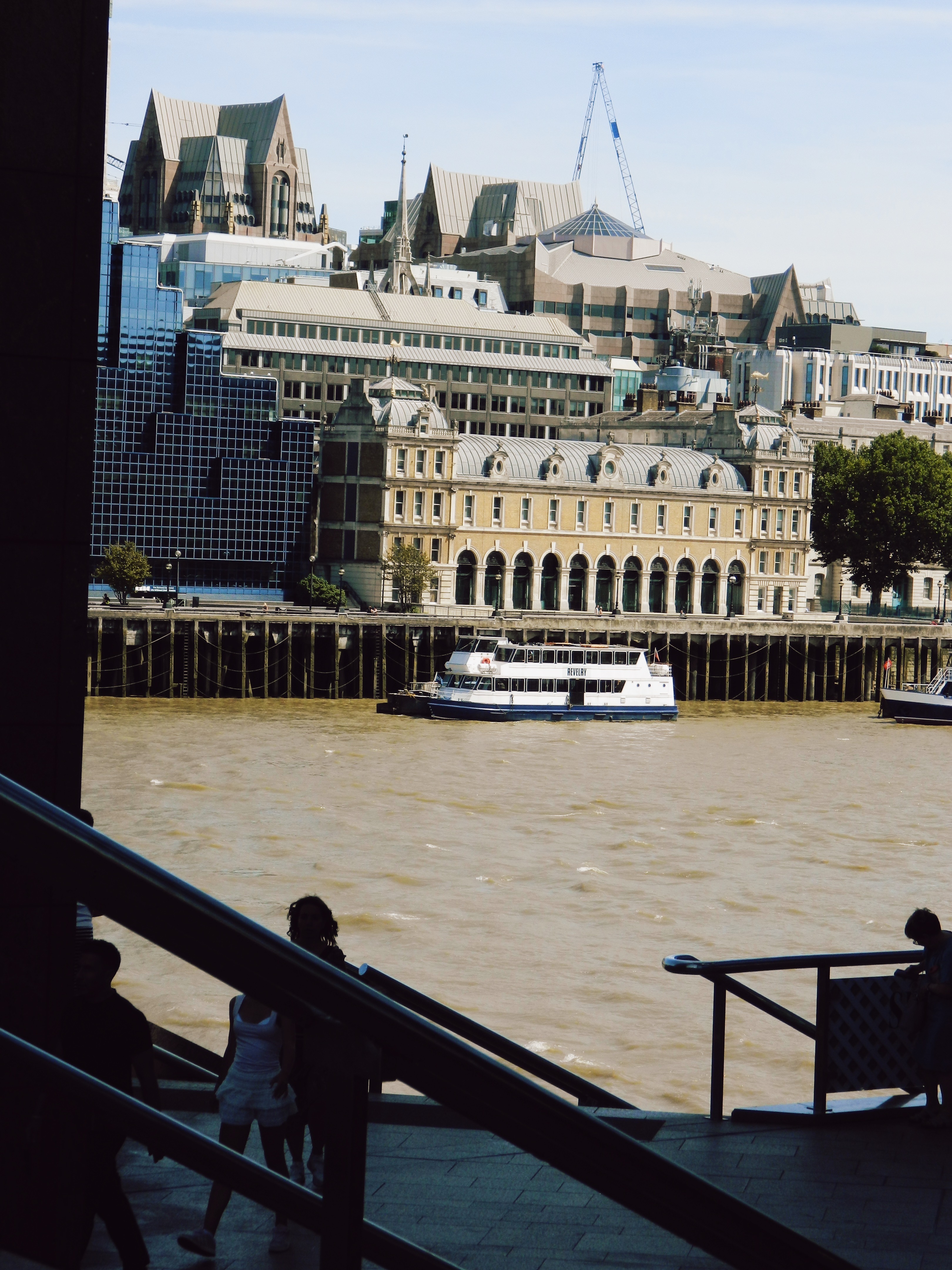
London has the River Thames. Paris has the River Seine. Both rivers are much more than geographical features. They are part of the visual identity of their cities. The Thames runs past some of London's most recognisable landmarks, including the Houses of Parliament, the London Eye and Tower Bridge. The Seine passes the Eiffel Tower, Notre-Dame, the Louvre and numerous historic bridges.
Both rivers also provide some of the best opportunities simply to walk.
A riverside stroll in either city can reveal architecture, street performers, cafés, monuments and constantly changing views. The rivers are also reminders of how closely the history of each capital is connected to trade, transportation and urban development.
6. Beautiful parks in the middle of enormous cities
Another thing London and Paris have in common is their ability to combine metropolitan energy with surprisingly peaceful green spaces. London is famous for parks such as Hyde Park, Regent's Park, St James's Park and Greenwich Park. Paris has the Jardin du Luxembourg, Jardin des Tuileries, Parc Monceau and Bois de Boulogne. These spaces provide something that both cities need: somewhere to slow down. Whether it's eating lunch on a park bench, taking a Sunday walk, reading a book or simply escaping the traffic for an hour, London's and Paris's parks demonstrate that great cities do not have to be entirely urban.
7. Neighbourhoods with distinct personalities
Neither London nor Paris is really just one city. They are collections of neighbourhoods, each with its own atmosphere. In London, you can move from the theatre and restaurants of the West End to the markets of Camden, the creative energy of Shoreditch or the elegant streets of Kensington. In Paris, the character changes as you move between Montmartre, Le Marais, Saint-Germain, Canal Saint-Martin and the Latin Quarter. This is one of the reasons both cities reward repeated visits. You don't necessarily need another list of famous monuments. Instead, you can return to explore a different neighbourhood.
8. A love of history — without being trapped by it
London and Paris are both historic cities, but neither feels like a museum. Medieval buildings, royal palaces and centuries-old streets exist alongside contemporary galleries, restaurants, technology companies, nightlife and modern architecture. That combination of old and new is part of their appeal. In London, you can see Roman, medieval, Victorian and contemporary architecture within the same day. Paris similarly combines medieval streets and Gothic architecture with Haussmannian boulevards, modern cultural buildings and contemporary neighbourhoods. Both cities demonstrate that a historic capital can continually reinvent itself.
9. Theatre, cinema and nightlife
London and Paris are also united by their extraordinary cultural calendars. London's West End is one of the world's great theatre districts, while Paris has an enormous theatrical tradition of its own, ranging from grand historic venues to experimental performance spaces. Both cities also have thriving cinema cultures. Paris has long been one of the world's great film capitals, while London has an enormous appetite for international cinema alongside British productions. Film festivals, independent cinemas, retrospectives and streaming services all contribute to a cultural relationship that extends well beyond tourism. And when the sun goes down, neither city goes quiet. From pubs and live music venues in London to wine bars and late-night cafés in Paris, both capitals have developed distinctive forms of nightlife that are deeply connected to their respective cultures.
10. They are both cities where walking matters
Despite their differences in size and layout, London and Paris are both wonderful cities to explore on foot. Paris's compact central neighbourhoods make wandering particularly rewarding, while London's larger scale means that walking can reveal dramatically different streetscapes from one district to the next. Recent comparisons of the two cities emphasise this contrast while also recognising that both reward visitors who spend time exploring beyond the major attractions. And sometimes the best itinerary is simply no itinerary at all. Pick a neighbourhood, find a café, walk towards the river and see what happens.
London and Paris: Two Cities Connected by Culture
Perhaps the most interesting thing London and Paris share is not a particular monument, dish or museum. It is their ability to turn everyday life into culture. In both cities, architecture matters. Food matters. Fashion matters. Art matters. A coffee break can become an occasion. A walk through a neighbourhood can become an afternoon. A museum visit can lead to dinner, and dinner can lead to a concert or a late-night drink. That is why the relationship between London and Paris remains so fascinating. They are different enough to feel distinctive, but similar enough to feel familiar.
And perhaps that is why the two cities work so well together as a European city break. Rather than choosing between London and Paris, travellers can experience both. Frequent Eurostar services make the journey between the two capitals relatively straightforward, helping to reinforce the connection between these two historic neighbours. Ultimately, the best things London and Paris share are the things that make both cities such enduring cultural destinations: curiosity, creativity, great food, art, fashion, history and the simple pleasure of being out in the city. The Channel may separate them geographically, but culturally, London and Paris have always been much closer than they appear.