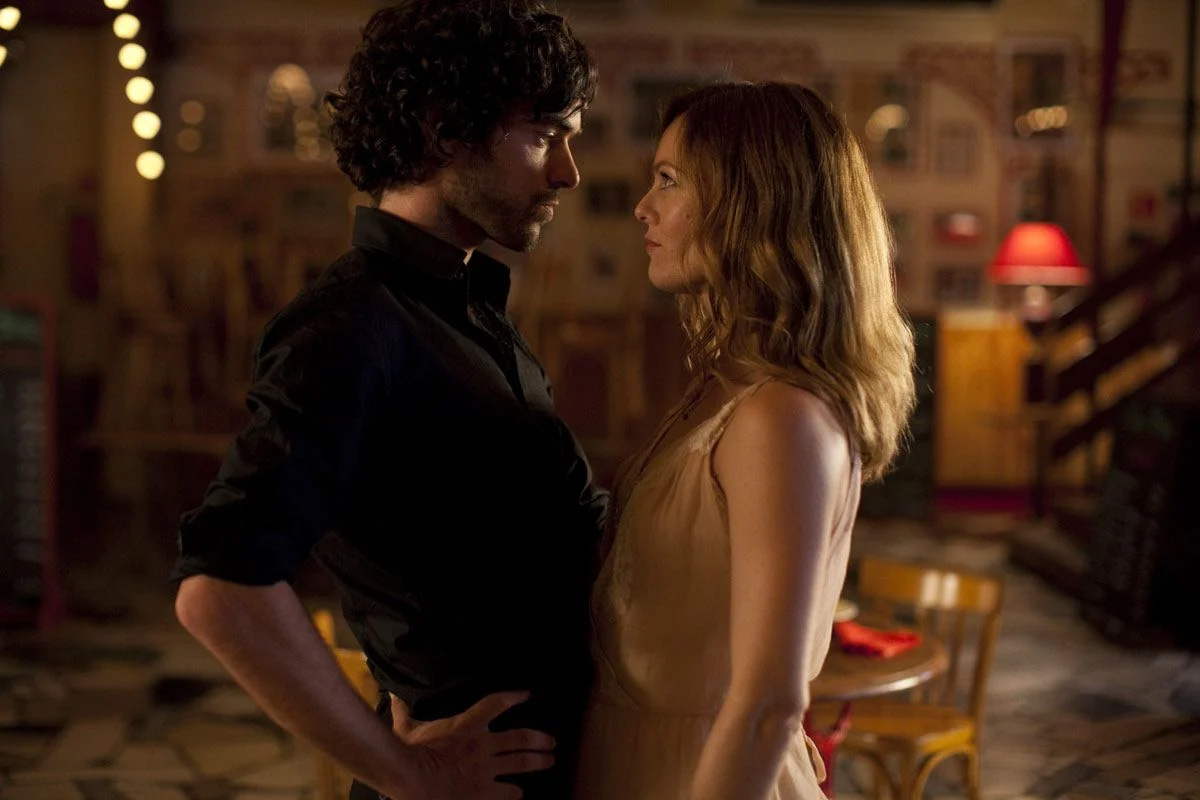
 Image courtesy of France Channel, “L’arnacoeur,” (2010)
France’s relationship with love did not emerge overnight. It was shaped slowly — by letters, legends, scandals, and silences — across centuries of history. Long before Paris became shorthand for romance, love in France was already being debated, restrained, idealized, and questioned. French history tells a very different love story than fairy tales suggest. One that values depth over drama, patience over passion, and complexity over certainty.
Courtly Love and the Invention of Romantic Longing
Some of the earliest French love stories emerged in the Middle Ages through courtly love. Troubadours in southern France wrote poems about unattainable lovers, secret devotion, and longing that could never be fully satisfied.These stories established a powerful idea that still lingers in French culture: love does not need fulfillment to be meaningful. In fact, distance and restraint were considered essential to true feeling. Love, from the beginning, was something to be contemplated rather than consumed.
Royal Love Affairs and Public Consequences
As France moved into the early modern era, love became inseparable from power. Kings and queens loved publicly — and often disastrously. Royal mistresses such as Madame de Pompadour were not hidden figures but cultural forces, shaping art, politics, and fashion. These relationships taught France that love was never purely private. It carried social consequences, moral judgment, and public scrutiny. Romance was powerful — but dangerous. French history learned early to be wary of love’s illusions.
The Literary Turn: Love as Inner Conflict
By the 17th century, French love stories moved inward. La Princesse de Clèves, often considered the first psychological novel, redefined romance as an internal struggle. The greatest drama was not betrayal or union, but self-restraint. This shift deeply influenced French culture. Love became a moral experience — something that tested integrity and self-knowledge rather than guaranteeing happiness. From this moment on, French love stories favored reflection over resolution.
Revolution, Reason, and Emotional Recalibration
The French Revolution changed not only politics, but emotion. Romantic excess became suspect. Reason, clarity, and equality reshaped relationships. Love stories from this period often wrestle with tension between passion and principle. Personal desire could no longer stand apart from social responsibility. France learned that love exists within history — not outside it.
The 19th Century: Love Meets Disillusionment
The 19th century produced some of France’s most famous love stories — and its most devastating ones. Novels like Madame Bovary revealed the dangers of romantic fantasy. Emma Bovary does not fail because she loves, but because she loves an illusion. This era cemented a defining French belief: love must be grounded in reality. Passion without self-awareness leads to disappointment. French culture did not reject romance — it disciplined it.
Paris Becomes the Stage of Love
As Paris modernized, love stories moved into cafés, apartments, and streets. Romance became urban, conversational, and intimate. Lovers talked. They waited. They walked. Love was no longer heroic. It was everyday. This transformation laid the groundwork for modern French cinema, where love unfolds through dialogue, silence, and shared time rather than spectacle.
War, Separation, and Written Love
The world wars reshaped French love profoundly. Separation became normal. Letters became lifelines. Love was written, delayed, and often unfinished. This period deepened France’s attachment to written expression — letters, notebooks, unsent messages. Love became something preserved in words when presence was impossible. Even today, French culture treats love as something that can survive absence.
Modern France: Love Without Illusion
In the late 20th century, French love stories grew quieter and more honest. Writers and filmmakers explored relationships marked by uncertainty, autonomy, and emotional realism. Love did not promise permanence. It promised meaning. This perspective still defines French attitudes today. Relationships are valued for depth rather than duration. Endings are not failures — they are part of the story.
Why French Love Stories Still Resist Happy Endings
Across centuries, French history has taught one enduring lesson: love is transformative, not reassuring. It reveals who we are, what we fear, and what we are willing to accept. French love stories do not aim to comfort. They aim to understand. This is why French cinema and literature continue to resonate globally. They offer something rarer than fantasy — emotional truth.
Love as a Cultural Inheritance
To love in France today is to inherit centuries of storytelling. The patience of courtly love, the restraint of classical novels, the realism of modern literature, and the quiet intimacy of cinema all coexist. Love is not rushed. It is observed. Not idealized. But respected. And that may be the most French love story of all.