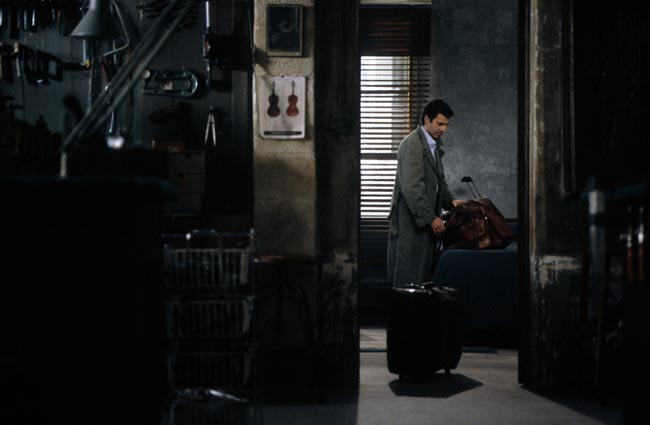
 Image courtesy of France Channel, “Un coeur en hiver,” (1992)
How French culture treats silence as a mark of thoughtfulness, not awkwardness.
Sit in almost any French café and you’ll notice something unusual, especially if you’re used to cultures where silence feels like a void that must be filled. Two friends sit together, sipping coffee, gazing out at the street, saying nothing for long stretches of time. Couples share dessert in comfortable quiet. Even business lunches include pauses — long ones — where people simply look around, consider, think. Nobody fidgets. Nobody panics. Nobody apologizes.
In France, silence isn’t a problem.
It’s a presence.
While in many places silence triggers anxiety or signals that something has gone wrong, the French often treat it as a natural part of conversation, even an elegant one. Silence is not an interruption in communication — it is communication, a space for reflection, nuance, or simply the pleasure of being together without performance.
This comfort with quiet has deep cultural roots. French communication is famously high-context: tone, timing, expression, and implication often matter more than directness. Silence becomes a tool, a way of letting ideas breathe. Rather than rushing to respond, the French appreciate a pause — a moment to think carefully before speaking. A thoughtful silence suggests respect for the conversation. It signals that the speaker is choosing their words with intention, not filling the air just to avoid discomfort.
You can see this dynamic beautifully in French cinema, especially the films available on France Channel. Characters sit with their emotions. They stare out windows, walk alongside rivers, linger in doorways. They do not always articulate what they feel — or need to. Meaning emerges from the gaps, from unspoken glances, from the way someone exhales instead of answering. The silence becomes expressive, textured, sometimes louder than dialogue. It is a hallmark of French storytelling: the belief that not everything needs to be explained for it to be understood.
The French also treat silence as a sign of intellectual comfort. In France, thinking is not seen as an activity done privately, away from others, but as something you can do together. Two people can sit quietly on a terrace, each absorbed in their own thoughts, without breaking the bond of companionship. Being able to share silence is seen almost as a mark of intimacy — a sign of friendship or affection so deep that words are optional.
This relationship with quiet creates a different kind of social atmosphere. Conversations tend to be slower, less frantic, more deliberate. The French enjoy digressions, tangents, and long reflective detours. They are comfortable pausing mid-thought, taking a sip of wine, letting an idea hang in the air. Nobody rushes to rescue the silence. Nobody forces a transition. The space between words is part of the rhythm.
Perhaps the most refreshing aspect of French silence is its lack of pressure. It does not demand explanation. It is not interpreted as boredom or tension. It’s simply a moment — neutral, gentle, alive with possibility. When a French person falls quiet, it often means they’re thinking, not disengaged. When a table of diners goes silent, it means they are savoring, not bored. When a friend stops talking during a walk, it means they’re comfortable, not uncomfortable.
In a world that prizes constant communication — instant messages, relentless updates, perpetual commentary — the French offer a quieter model. Silence can be a refuge. A pause. A breath. A sign of attention rather than its absence. It invites presence rather than distraction.
And perhaps this is why silence never feels lonely in France. When two people share a quiet moment — in a café, in a park, on the metro, or on a balcony overlooking the rooftops — it feels less like a lapse and more like a small act of trust. A reminder that companionship does not require noise, and that sometimes the deepest conversations are the ones where no one speaks at all.