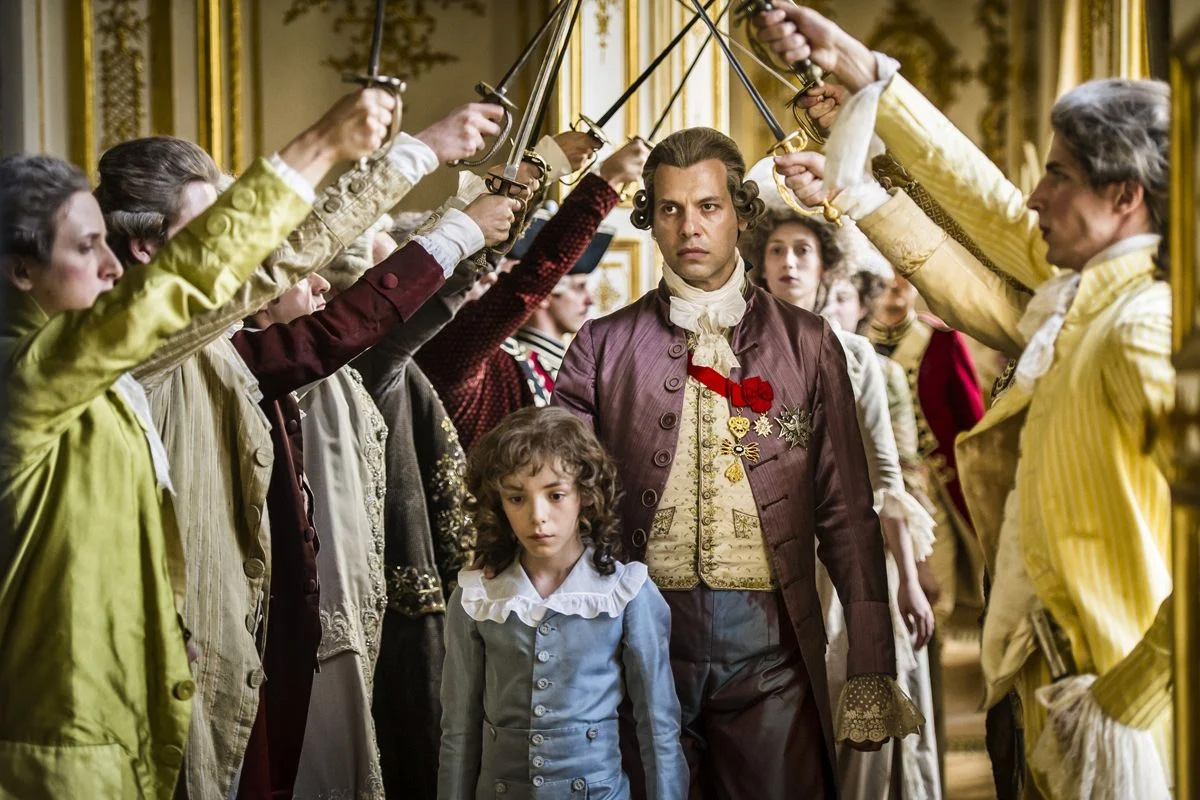
 Image courtesy of France Channel, “Le peuple et son roi,” (2018)
Paris woke before dawn on January 21, 1793. The cold was sharp, the sky heavy with winter light that had not yet fully arrived. Snow and frost clung to the streets. Bells rang in the distance, not to celebrate, but to summon witnesses. By mid-morning, the French monarchy — a system that had shaped France for more than a thousand years — would no longer exist.
This was not just the death of a man. It was the end of an idea.
A King Without a Crown
Louis XVI was no longer called king. In the final months of his life, he had become simply Louis Capet, stripped of divine authority and reduced to a citizen before the law. The transformation was symbolic and deliberate. The Revolution sought not only to remove him from power, but to dismantle the belief that monarchy itself was sacred.
His trial had unfolded amid fear, anger, and exhaustion. France was at war with itself and with Europe. The Revolution, once hopeful, had hardened. Mercy now felt dangerous. To spare the king was to invite the return of the old world.
The verdict was inevitable.
A January Morning of Silence
On the morning of his execution, Paris was eerily quiet. Soldiers lined the streets from the Temple prison to the Place de la Révolution. Crowds gathered not with celebration, but with tense anticipation. The cold kept voices low. Breath fogged the air.
Louis XVI rode in a green carriage, escorted through streets he once ruled. Witnesses later described his calm — not heroic, not theatrical, but resigned. He had spent the night in prayer, writing farewell letters, asking forgiveness.
Winter has a way of stripping emotion bare. There was no warmth left in the ritual. Only finality.
The Guillotine and the Crowd
At approximately 10:22 a.m., Louis XVI was led to the scaffold. The guillotine stood stark against the winter sky — efficient, modern, merciless. He attempted to speak to the crowd, to assert his innocence, to forgive his enemies. The drums rolled, drowning out his voice.
Moments later, it was over.
The executioner raised the severed head. Some in the crowd cheered. Others stood frozen. Many would later say they felt nothing at all — only a hollow recognition that something irreversible had just occurred.
France had crossed a line from which it could not return.
Why January Mattered
That this moment occurred in January feels significant. Winter in France has long been associated with reckoning rather than renewal. January is a month of endurance, not optimism. The execution did not come amid spring’s promise or summer’s abundance, but during the coldest stretch of the year.
The Revolution, like winter, had reached a point where excess had fallen away. What remained was necessity.
Executing the king was not presented as revenge, but as survival.
The End of Divine Right
With Louis XVI’s death, the idea of divine monarchy collapsed publicly and violently. Power was no longer inherited by birthright. Authority now claimed to come from the people — a concept as fragile as it was radical.
Yet the execution also unleashed terror. The following months would bring mass executions, paranoia, and bloodshed. January 21 did not bring clarity. It brought consequences.
History often marks revolutions by their ideals. France remembers this one by its winter.
Memory, Cinema, and the French Relationship with History
French culture has never treated this moment lightly. Films, novels, and essays return to it not for spectacle, but for understanding. The execution of Louis XVI is often portrayed quietly — without triumph — as a tragic turning point rather than a victory.
French cinema, in particular, resists simplifying the event. Winter settings, muted color palettes, and restrained performances reflect a national discomfort with easy conclusions. The monarchy fell, but certainty did not replace it.
This ambiguity remains central to how France remembers January 1793.
A Country Changed Before Noon
By midday, Paris resumed its routine. Cafés reopened. Markets stirred. Life continued — because it had to. But the country was irrevocably altered.
France would never again be ruled by unquestioned authority. Every government that followed would exist in dialogue with that cold January morning.
The execution of Louis XVI did not end conflict. It ended illusion.
And in the winter light of January 21, 1793, France stepped into a future defined not by kings — but by consequence.