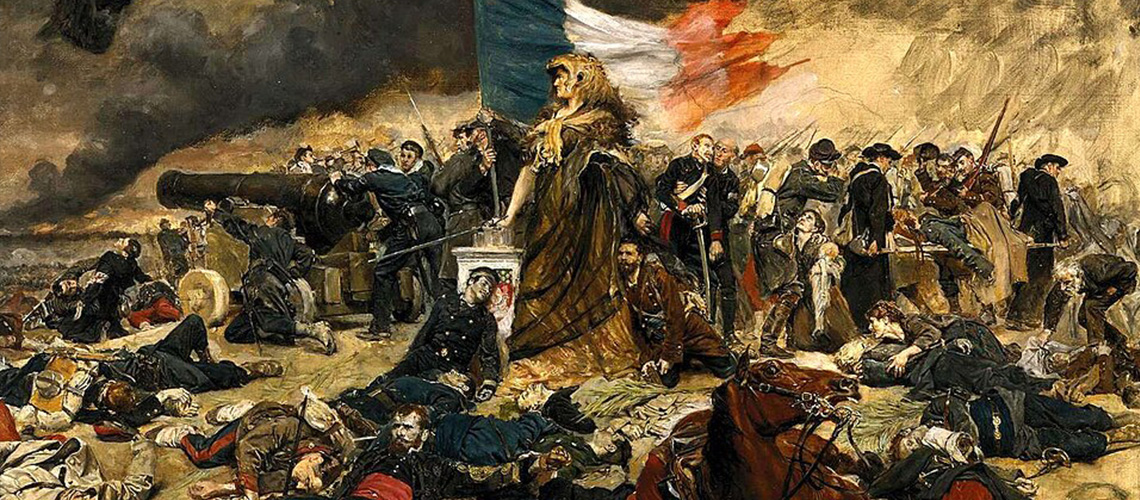
 Image courtesy of Wikimedia Commons, “Le Siège de Paris,” (1870-1884) Ernest Meissonier
Cold, hunger, resilience, and daily survival
By January 1871, Paris was no longer the city the world imagined. The boulevards were still there. The grand buildings still stood. But beneath the familiar façade, life had been reduced to its most basic concerns: warmth, food, and endurance.
For four months, the city had been encircled by Prussian forces during the Franco-Prussian War. By January, winter had settled in fully — and with it, hunger, exhaustion, and a quiet, stubborn resolve. Paris was cut off from the outside world, surviving on what little it had left.
This was not a dramatic collapse. It was a slow one.
A City Cut Off From Time
The siege of Paris turned the capital inward. Railways were blocked. Supplies dwindled. Letters arrived sporadically, sometimes by balloon, sometimes not at all. Time felt suspended, marked more by meals missed than by dates on a calendar.
January intensified this isolation. Cold seeped into apartments built for elegance, not endurance. Firewood was scarce. Many Parisians burned furniture, books, anything that could provide a few hours of heat.
Winter stripped the city of illusion. Paris became smaller, quieter, more fragile.
Hunger as a Daily Reality
By January, food shortages had reached their breaking point. Bread was rationed. Meat had disappeared. The famous story of Parisians eating zoo animals was not a myth but a symptom — an indication of how desperate conditions had become.
Meals were no longer social rituals. They were calculations. Families learned to stretch what little they had, to cook creatively, to endure hunger without complaint. Restaurants, once symbols of Parisian pleasure, became places of improvisation and survival.
Hunger reshaped daily life, but it did not erase dignity.
The Sound of a Winter City
Paris in January 1871 was unnervingly quiet. Without traffic, without abundance, the city’s sounds changed. Footsteps echoed. Church bells marked time. Distant artillery reminded residents of the world beyond the barricades.
Silence was punctuated by waiting — waiting for news, for relief, for an end that never seemed close. Yet daily routines persisted. People walked, talked, queued, and endured. The city continued to breathe.
This quiet resilience is something French cinema would later learn to capture well: suffering portrayed not through spectacle, but through restraint.
Cold Homes and Shared Warmth
Most Parisian apartments were ill-equipped for extreme winter conditions. Coal shortages meant fires burned rarely. Families gathered in single rooms to conserve heat. Coats were worn indoors. Breath fogged the air.
Public spaces became shelters of sorts. Cafés, when open, offered warmth as much as drink. Community mattered more than ever. Survival was collective, not individual.
In this way, January 1871 revealed a Paris bound together not by luxury, but by necessity.
Morale, Memory, and the Will to Continue
Despite hunger and cold, Paris did not collapse into chaos. Newspapers continued to publish. Theaters attempted performances. Artists sketched, writers wrote, musicians played when they could.
This insistence on cultural life was not denial. It was resistance. Maintaining routines — however fragile — became a way to assert humanity in inhuman conditions.
January was the emotional low point of the siege, but it was also when resilience became most visible.
The End Was Near, But Unknown
Parisians did not know in January that the siege would end later that month. They lived without certainty, without timelines, without assurances. Each day was endured on its own terms.
This uncertainty shaped memory. The siege is remembered not only for its suffering, but for its quiet heroism — the ability to continue without guarantees.
A Winter That Changed Paris Forever
When the siege ended, Paris emerged altered. Hunger, cold, and loss had left marks not just on bodies, but on collective consciousness. The city would soon face further upheaval with the Paris Commune, but January 1871 remained a defining moment — a winter when survival itself became an act of courage.
Today, echoes of that winter linger in French storytelling. Films and novels return to the siege not for grandeur, but for intimacy — for the way ordinary lives persisted under extraordinary strain.
Paris in January 1871 was not beautiful.
But it was resilient.
And that resilience became part of the city’s soul.