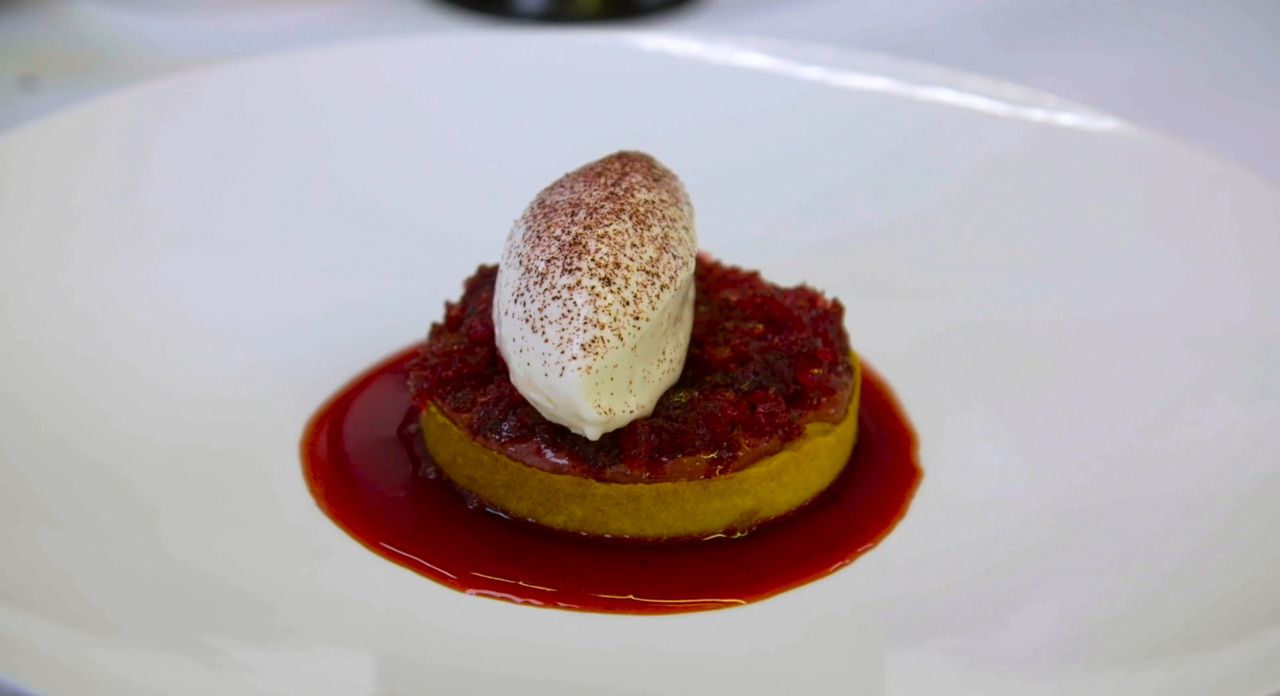
 Image courtesy of France Channel, “A Taste of France” (2019)
French cuisine is often described as one of the great culinary traditions of the world. Its reputation is built on an extraordinary combination of technical precision, regional diversity and an almost philosophical appreciation of the pleasures of eating. From the delicate pastries of Paris to the rich seafood dishes of Provence, French food is inseparable from the landscapes, histories and communities that produce it. Yet what does it mean to cook French food today, and how does a culinary tradition remain relevant in an increasingly international gastronomic landscape?These are some of the questions explored in A Taste of France (Les Maîtres des saveurs), a documentary series that takes viewers on a journey through the country's regional cuisines. Rather than concentrating exclusively on celebrated restaurants or celebrity chefs, the series follows international culinary talents as they discover local ingredients, visit producers and reinterpret the traditions of the regions in which they work.
Across ten episodes, the programme explores places including Corsica, the Alps, Lyon, Occitanie, Provence, Normandy, Paris, Burgundy and the French Basque Country. Its chefs come from a remarkable range of backgrounds, including Argentina, Australia, Germany, Italy, Japan, Malaysia, Sweden and the United Kingdom. What connects them is a shared fascination with French ingredients and the possibilities offered by the country's culinary heritage. The result is more than a collection of cooking demonstrations. A Taste of France is a portrait of a country through its food, exploring the relationship between landscape, tradition, creativity and the people who bring ingredients from the farm, sea and vineyard to the table.
French gastronomy begins with the land
One of the defining ideas of French cuisine is terroir: the relationship between a particular place and the products that emerge from it. The term encompasses more than geography or climate. It includes agricultural practices, local knowledge, cultural traditions and the accumulated experience of generations of producers. In France, this relationship is particularly visible in the extraordinary diversity of regional food. The ingredients available in the Alps are different from those found along the Mediterranean coast, while the culinary traditions of Normandy, Burgundy and the Basque Country have developed according to their own agricultural and cultural histories.
A Taste of France makes this diversity central to its storytelling. Each episode begins by exploring a region's distinctive products and the people responsible for producing them. The chefs visit farms, markets, vineyards and other places of cultivation, discovering the conditions that give local ingredients their particular character.
This emphasis on provenance is important because it challenges the idea that a dish begins in the kitchen. A chef may determine how an ingredient is prepared, but its qualities have already been shaped by the soil, climate, cultivation and knowledge of the producer. Understanding French cuisine therefore requires looking beyond the restaurant and towards the wider landscape. The programme also makes an implicit argument about the value of regional identity. In an age of increasingly standardised food production, local ingredients and traditional methods offer a connection to particular places. They provide a sense of continuity, allowing culinary practices to evolve without losing their relationship with the communities from which they originate.
A French culinary tradition with an international perspective
Perhaps the most distinctive aspect of A Taste of France is its decision to explore French gastronomy through the eyes of international chefs. Rather than presenting French cuisine as an exclusively national achievement, the series follows cooks who have arrived from elsewhere and developed their own relationships with French ingredients. Their perspectives introduce a productive tension between tradition and innovation. In Corsica, for example, Italian chef Fabio Bragagnolo and English chef Simon Andrews explore the island's culinary heritage, bringing their individual backgrounds to a region with a strong gastronomic identity. In the Alps, Australian chef Sharon Frannais and Welsh chef Siôn Evans encounter a landscape defined by cheeses, freshwater fish, fruit and mountain produce.
The Lyon episode introduces Brazilian chef Tabata Mey and Swedish chef Connie Zagora, while the Provence episode follows Argentinean chef Mauro Colagreco and Scottish chef Malcolm Gardner. Elsewhere, Japanese, German, Dutch and Australian chefs bring their own experiences to the ingredients and traditions of the French Basque Country, Normandy and other regions. This international dimension is more than a convenient way of introducing different personalities. It raises an interesting question about cultural identity: can someone become deeply connected to a culinary tradition without having been born into it?
The series suggests that the answer is yes. Its chefs demonstrate that an appreciation of French gastronomy does not require reproducing an established national style. Instead, it involves understanding the ingredients, respecting their origins and discovering how they might be used in new ways. Their cooking reflects a broader reality of contemporary French culture. France's culinary identity has never existed in complete isolation from external influences. It has developed through exchanges, migrations and encounters with other food traditions. The international chefs in A Taste of France make this process visible, showing how a cuisine can remain recognisably French while welcoming new interpretations.
From Corsica to Provence: the importance of regional identity
One of the pleasures of watching A Taste of France is the opportunity to discover just how different the country's regional cuisines can be. In Corsica, the island's geography and history have produced a culinary culture with strong Mediterranean influences. Its cheeses, cured meats, chestnuts, olive oil and seafood reflect a landscape in which local production remains closely connected to regional identity. The programme's Corsican episode explores this heritage through chefs working in Ajaccio and Porto-Vecchio, highlighting the island's particular ingredients and the ways they can be incorporated into contemporary cooking.
The Alps offer a completely different culinary environment. Here, mountain agriculture, freshwater fish, cheeses and seasonal produce define the possibilities available to chefs. The landscape itself becomes an essential part of the gastronomic experience, influencing not only the ingredients but also the traditions surrounding their preparation. In Lyon, the programme encounters one of France's most celebrated culinary centres. Often described as the gastronomic capital of the country, Lyon has a long-established food culture associated with its markets, traditional restaurants and regional specialities. Its cuisine is historically connected to the surrounding agricultural regions, making the city an important meeting point between rural production and urban dining.
Provence, meanwhile, offers a cuisine shaped by sunlight, Mediterranean ingredients and a long history of exchange. Olive oil, vegetables, aromatic herbs, seafood and local wines form the basis of a culinary tradition that is both distinctive and adaptable. The programme's Provence episode is particularly interesting because it follows Mauro Colagreco, the Argentine-born chef whose restaurant Mirazur in Menton became internationally renowned. His approach demonstrates how a chef can work within the traditions of a region while developing a highly personal culinary language. The episode also features Malcolm Gardner in Marseille, where Mediterranean fish and local vegetables are central to his cooking.
These regional journeys reveal that there is no single way to define French food. The country's culinary identity is better understood as a collection of distinct traditions, each shaped by its own geography and history.
The people behind the ingredients
Although chefs are naturally central to a culinary documentary, one of the strengths of A Taste of France is its attention to the people who produce the ingredients they use. The programme regularly takes its participants away from restaurant kitchens and into the places where food originates. They meet farmers, fishermen, growers, winemakers and other specialists whose work determines the quality and availability of regional products.
These encounters are particularly revealing because they show the amount of knowledge involved in producing seemingly simple ingredients. A vegetable, a piece of fish or a particular variety of cheese is not simply a commodity. It is the result of decisions about cultivation, breeding, harvesting, ageing and preservation. The relationship between chef and producer is therefore central to the series' understanding of gastronomy. A successful dish depends not only on the technical abilities of the person preparing it, but also on the expertise of everyone involved in bringing its ingredients to the kitchen.
This is also where the programme connects with contemporary conversations about sustainability and responsible food production. Although A Taste of France is primarily a celebration of regional gastronomy, its attention to local suppliers encourages viewers to consider where food comes from and how culinary choices affect the communities responsible for producing it. There is something particularly valuable about this approach in a culture where restaurant dining can sometimes obscure the labour behind the finished dish. By returning to the farms, vineyards and markets, the series restores a sense of context to the act of eating.
Tradition and innovation: can French cuisine reinvent itself?
French gastronomy is often associated with a relatively formal idea of culinary excellence. Classical techniques, carefully structured menus and elaborate presentations have helped establish the international reputation of French haute cuisine. But the history of French cooking is also a history of transformation. From the codification of classical techniques by chefs such as Auguste Escoffier to the emergence of nouvelle cuisine in the twentieth century, French gastronomy has repeatedly redefined its own standards. What was once considered innovative eventually becomes part of the tradition, while new generations of chefs find different ways to challenge established expectations.
A Taste of France explores this relationship through its international participants. The chefs are not simply reproducing traditional recipes. They are using regional products as the starting point for contemporary interpretations, combining technical knowledge with their own culinary experiences. The Provence episode offers a particularly striking example through Colagreco's reinterpretation of bouillabaisse, one of the region's most recognisable dishes. Traditionally associated with Marseille and the fishing communities of the Mediterranean coast, bouillabaisse is more than a seafood recipe: it is part of the cultural identity of the region. Revisiting such a dish requires an understanding of its history as well as the confidence to approach it differently.
This is the distinction between innovation and novelty. A chef can change the presentation of a dish or introduce unfamiliar ingredients, but genuine culinary creativity involves understanding why a particular preparation exists in the first place.The series suggests that tradition and experimentation are not opposing forces. On the contrary, a strong understanding of culinary heritage can provide the foundation for new ideas.
Food as a form of cultural exchange
There is another reason why the international perspective of A Taste of France feels particularly relevant. Food is one of the most accessible ways in which cultures encounter one another. Unlike certain aspects of national identity that require specialist knowledge or historical understanding, food can be experienced through the senses. A flavour, an ingredient or a cooking technique can communicate something about a place without the need for lengthy explanation.
The chefs featured in the series demonstrate how this exchange works in practice. Their backgrounds influence the way they approach French ingredients, but their experiences in France also transform their understanding of cooking. The resulting dishes occupy an interesting space between different culinary traditions. This process is not unique to professional gastronomy. French food culture itself has been shaped by centuries of movement and exchange. Ingredients and techniques have travelled across borders, while migration has introduced new flavours and culinary practices into everyday French life.
The idea of a completely fixed national cuisine is therefore somewhat misleading. What we understand as French food today is the result of a long process of adaptation. Its traditions are meaningful precisely because they have continued to evolve. By bringing together chefs from different countries, A Taste of France presents this evolution as something positive. It suggests that international influences need not diminish regional identity. Instead, they can offer new ways of appreciating the ingredients and traditions that already exist.
The pleasure of discovering France through food
Ultimately, A Taste of France succeeds because it understands that gastronomy is about much more than cooking. Food connects people to landscapes, histories and communities. It can preserve traditions, express individual creativity and provide a means of cultural exchange. The programme's ten regional journeys offer an appealing introduction to the diversity of French culinary life. They take viewers from the Mediterranean coast to the mountains, from the markets of Lyon to the vineyards of Burgundy, revealing the different ingredients and practices that give each region its identity.
But the series also invites a more personal form of discovery. Watching the chefs meet producers, explore local markets and develop new dishes encourages viewers to think about their own relationship with food. It reminds us that an appreciation of French cuisine need not begin with an elaborate restaurant meal. It can start with a local cheese, a seasonal vegetable, a bottle of regional wine or a conversation with someone who has spent their life producing food. In this sense, the title A Taste of France is particularly appropriate. The series does not attempt to define the country's entire culinary identity in a single account. Instead, it offers a collection of encounters, each revealing a different aspect of French gastronomy.
Its central message is that the richness of French cuisine lies not in its ability to remain unchanged, but in its capacity to be continually rediscovered. Through the work of local producers and the creativity of international chefs, the programme presents a culinary tradition that is deeply rooted in place yet open to the world. To understand France, it is often worth beginning at the table. And A Taste of France offers a particularly inviting place to start.