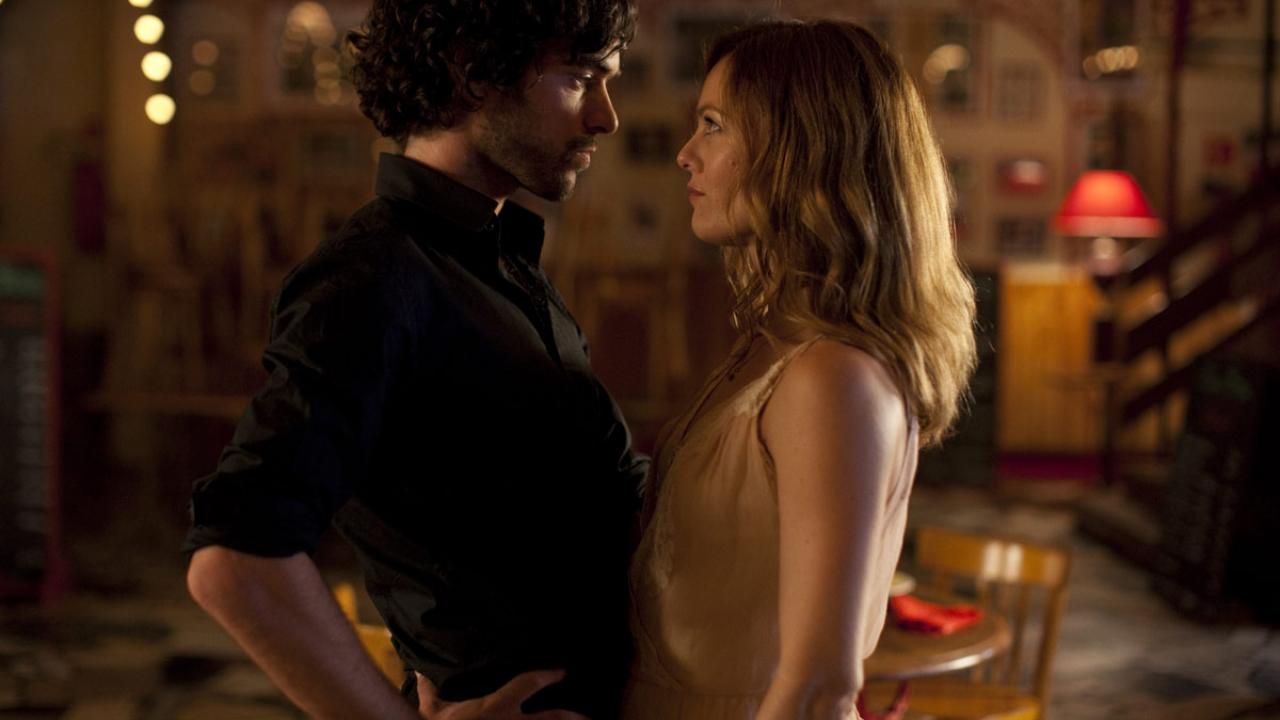
 Image courtesy of France Channel, “L’arnacoeur” (2010)
On February 14, Paris glows a little brighter. Florists spill onto sidewalks in cascades of red roses, candlelit tables fill early. The Seine reflects clusters of couples leaning toward one another in the cold, and then, by the next morning, the roses begin to wilt.
In Paris, however, romance does not.
While Valentine’s Day is acknowledged in France -chocolates are exchanged, dinners are booked — it has never carried the emotional weight it does elsewhere. For many French couples, February 14 is pleasant, but not essential. Love, here, is not meant to peak on a single evening. It is meant to live quietly in the days that follow. Because in Paris, romance survives not through grand declarations but through repetition.
Why Valentine’s Day Is Not the Center of French Romance
Unlike in some countries where Valentine’s Day can feel like a performance of devotion, French culture traditionally resists emotional spectacle. Love is personal, private, slightly restrained. The French rarely rely on one dramatic gesture to sustain intimacy. Instead, romance is built through habit — through shared rituals that anchor relationships in daily life. A bouquet may be lovely but remembering how someone takes their coffee is better.
Valentine’s Day may offer a moment of heightened attention, but Parisian couples understand something subtler: love is maintained in February 15th, 16th, and every ordinary Tuesday thereafter.
The Art of Everyday Ritual
Walk through any Paris neighborhood in late winter and you’ll see it — small, unremarkable scenes that reveal enduring intimacy: a couple splitting a tartine at a corner café, two people walking arm in arm through a Sunday market, a quiet glass of wine shared before dinner at home. These are not cinematic gestures designed for display, they are rituals. French relationships often prioritize rhythm over intensity. The weekly market visit, the evening apéritif. The habit of talking — really talking — at the dinner table. Romance becomes something woven into the structure of life, rather than staged outside of it.
Conversation as Devotion
In France, conversation is often the deepest form of affection. Parisian couples linger over meals not because they are extravagant, but because they are unhurried: dialogue stretches, disagreement is allowed, silence is comfortable. This emphasis on conversation keeps relationships dynamic. Love is sustained through curiosity — about the world, about ideas, about each other. While roses fade, dialogue renews itself. Perhaps this is the most enduring Parisian secret: emotional intimacy requires attention more than celebration.
The Subtle Gesture
Grand declarations may define romantic comedies, but in Paris, love often expresses itself through precision: choosing the exact cheese your partner prefers, bringing home their favorite pastry without being asked, adjusting your pace to match theirs on a rainy evening walk. These gestures are small, almost invisible yet they accumulate. Over time, they form a language more powerful than spectacle. French romance is rarely loud: it is observant.
Loving the City Together
Part of sustaining romance in Paris lies in how couples inhabit the city itself. They return to the same café, they revisit the same museum, they walk familiar routes along the Seine. Paris encourages repetition without boredom: the light changes, the season shifts, the conversation evolves. Love, like the city, is revisited — not reinvented and this familiarity becomes comforting rather than dull. There is elegance in returning.
Romance Without Performance
One reason Valentine’s Day feels less central in France is that romance is not designed for public validation. There is no pressure to prove affection through social display. In fact, French culture often finds overt exhibition slightly excessive. The most meaningful gestures happen privately: in kitchens, in apartments overlooking narrow streets, in quiet metro rides home. Love is not a holiday. It is a habit.
After the Roses Fade
By late February, the floral displays disappear, winter lingers. The city returns to its steady rhythm but for Parisian couples, nothing essential has changed. They continue meeting for coffee, they continue arguing gently (if pedantically) about films, they continue walking home together in the evening cold. Romance, here, survives because it was never concentrated into a single day. It lives in repetition, in attention, in shared time. The roses may fade but the ritual remains.