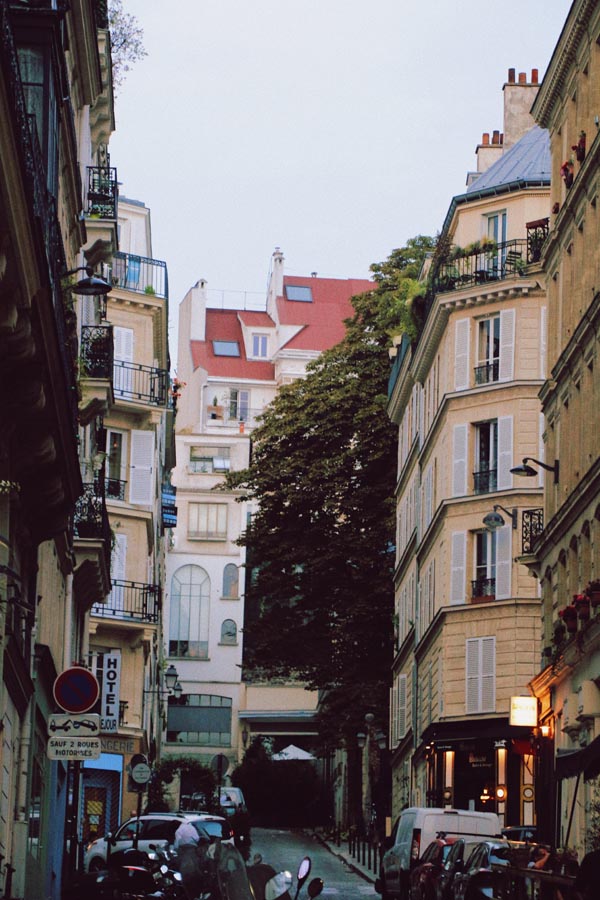
 Image courtesy of Fiona McMurrey
Paris has always belonged to film. Not just cinema, but photographic film — the kind that slows you down, makes you wait, and asks you to look twice. In a city built on light, shadow, and quiet emotion, film photography feels less like a technique and more like a way of seeing.
To photograph Paris on film is to accept its rhythm rather than impose your own.
Let the City Set the Pace
Film does not reward urgency. You can’t shoot endlessly or check your results instantly. Each frame matters. Paris, with its measured elegance and unhurried beauty, naturally complements this approach.
Walking through the city with a film camera encourages patience. You begin to notice how light moves across stone façades, how reflections linger in café windows, how people pause at street corners. Paris reveals itself slowly — and film is willing to wait.
Light Is the Real Subject
Paris is a city of changing light. Morning mist softens bridges. Afternoon sun sharpens shadows. Evening glow warms everything it touches.
Film responds beautifully to this variation. Rather than flattening the scene, it preserves atmosphere. Winter light feels hushed. Summer light feels golden. Overcast days feel intimate.
In Paris, light doesn’t just illuminate — it tells a story.
Photographing Mood, Not Monuments
The most compelling film photos of Paris rarely focus on famous landmarks. Instead, they capture moments in between: a woman reading on the metro, steam rising from a café cup, footsteps on wet pavement.
Film encourages this shift in perspective. Without endless exposures, you begin to look for feeling rather than spectacle. Paris becomes less of a destination and more of a presence.
French cinema understands this instinctively. Many of the most memorable Parisian scenes are built around quiet gestures, not grand views. Film photography speaks the same language.
Embrace Imperfection
Film does not promise precision. Grain, blur, light leaks, and uneven exposure are not flaws — they are texture. In Paris, where history layers over itself and beauty often hides in wear and weathering, imperfection feels natural.
Cracked walls, faded posters, rain-soaked streets — these elements give Paris its emotional depth. Film captures them with softness rather than sharpness, preserving the city’s sense of memory.
A perfect image is not always a meaningful one.
Let Silence Shape the Image
Some of the strongest photographs are quiet. An empty café in the morning. A closed bookstore at dusk. A lone figure on a bridge.
Paris in these moments feels introspective, almost cinematic. Film photography allows silence to exist in the frame. Nothing has to happen for the image to matter.
This restraint mirrors French storytelling, where atmosphere often carries more weight than action.
Winter, Film, and Paris
Winter is an especially poetic season for film photography in Paris. Light is softer, streets are quieter, and colors become more restrained. Film captures this mood with subtlety rather than brightness.
Snow, fog, and grey skies create images that feel timeless — as if they could belong to any decade. The city becomes less performative and more personal.
Paris in winter doesn’t ask to be admired. It invites you to observe.
Photographing as a Form of Presence
Shooting on film turns photography into an act of attention. You slow down. You choose carefully. You commit to the moment.
In Paris, this approach feels particularly fitting. The city does not reveal itself to those who rush through it. It responds to those who linger.
Film teaches you how to linger.
When Photography Feels Like Cinema
Many people fall in love with Paris through French films — not because of what they show, but how they show it. Long takes, quiet streets, soft light, emotional restraint.
Film photography carries that same sensibility. Each frame feels like a still from a story you’re living rather than watching.
With the right patience, Paris becomes less of a subject and more of a scene.
Capturing a City That Already Feels Like a Memory
Paris doesn’t need to be transformed into something cinematic. It already is.
Photographing it on film simply allows you to meet the city on its own terms — gently, thoughtfully, and without haste.
And when the images finally develop, weeks later, they don’t just show what you saw.
They show how it felt.